


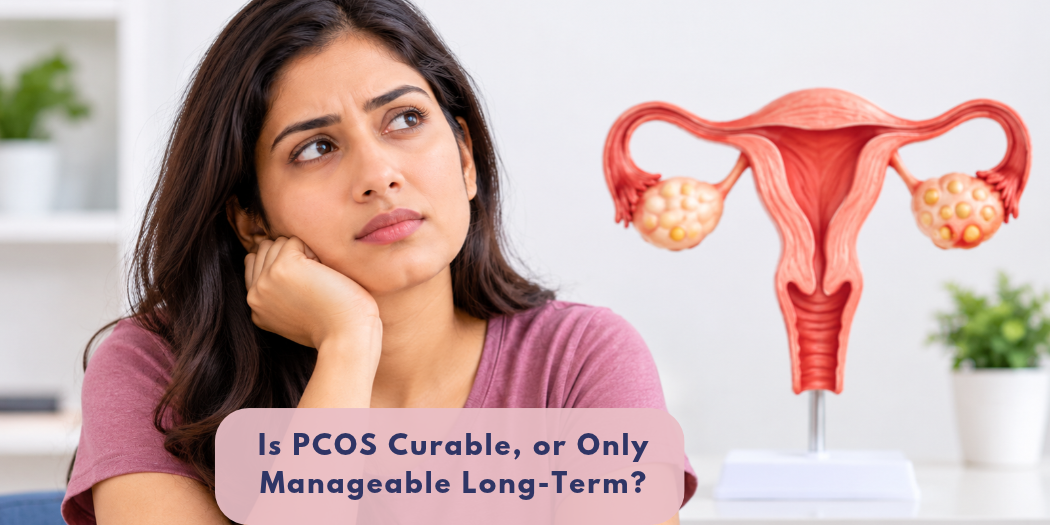
Whether PCOS is curable is a question many women ask soon after a diagnosis, and at present it is not. PCOS is a long-term hormonal and metabolic condition, so the aim of treatment is not to wipe it out but to keep it under steady control. With the right plan, many women find that their cycles, skin, weight and blood sugar become much easier to manage over the years. This blog explains what “manageable” actually looks like and what PCOS treatment involves along the way.
According to Dr. Pallavi Chauhan, Obstetrician and Gynaecologist at Hridyarambh Clinic, Andheri East, Mumbai, “PCOS is manageable, and with the right understanding and a personalised PCOS treatment plan, many women can improve their hormonal balance. It is a long-term condition, so the focus is on keeping symptoms under control rather than curing it. The plan differs from one woman to another and is reviewed from time to time.”
For information about PCOS treatment options, you can contact the clinic at +91 9967482300.
Is PCOS curable?
No, and it’s worth being straight about that, because “PCOS cure” claims are all over the internet. No treatment has been shown to cure it. PCOS comes from a mix of insulin resistance, extra androgens and irregular ovulation, with what looks like a genetic tendency underneath it all. You can’t treat that tendency away. What you can do is control what it causes: the missed periods, the acne, excess hair growth, the weight gain, the blood sugar issues.
And when you do, it can feel a lot like a cure. Periods turn up on time and the skin settles. But the condition is still there. A few regular cycles don’t mean it’s gone, and a good run of weight loss doesn’t either. PCOS also isn’t just about cysts on the ovaries, as the blog on bilateral ovarian cysts and fertility explains.
So if you’re asking whether PCOS is curable because you want your normal life back, the realistic answer is control rather than cure, and many women can keep their symptoms well controlled.
What does long-term PCOS treatment involve?
There’s no standard prescription, which surprises some women. PCOS treatment depends on what’s bothering you most and what you want next. Someone trying for a baby and someone fed up with acne need different plans.
Lifestyle is the base for almost everyone. When there’s extra weight, losing 5 to 10 percent tends to help insulin, hormones and periods, so you don’t need a dramatic number. On top of that, doctors may use hormonal medicines to get periods on track, metformin when insulin resistance or weight is part of it, and separate treatment for acne or unwanted hair. That’s all the doctor’s call, based on your health and pregnancy plans, so please don’t start any of it on your own. If you want to conceive, ovulation support or infertility treatment can help, and plenty of women with PCOS do get pregnant. Teenagers with symptoms can begin early with adolescent care.
Then there’s the long game. PCOS doesn’t switch off, so check-ups don’t either. Blood sugar, cholesterol and blood pressure get checked over the years, because PCOS is linked with a higher risk of diabetes and heart disease.
What Determines PCOS Treatment?
PCOS treatment isn’t the same for every woman. The plan depends on the individual case.
- Your symptoms lead the plan. Irregular periods, acne, excess hair growth and weight gain each need different care. The plan follows what troubles you most.
- Pregnancy plans matter. If you’re trying to conceive, ovulation support or infertility treatment may be needed. If you aren’t, the focus is usually on cycle control and long-term health.
- Age and life stage count. A teenager and a woman in her thirties may need different approaches. The plan is also reviewed as your needs change.
- Test results guide the choice. Blood sugar, cholesterol, thyroid and hormone levels show whether insulin resistance or other problems need treating alongside.
- Overall health shapes what is suitable. Extra weight, other conditions and current medicines all affect the options. Medicines such as metformin or hormonal tablets are used only on a doctor’s advice.
Key takeaways
- PCOS can’t be cured at present, but it can be managed well over the long term.
- It comes from insulin resistance, extra androgens and irregular ovulation, so treatment aims to control the effects rather than remove the condition.
- There’s no standard plan. It usually starts with lifestyle changes, and medicines are added only when a doctor advises.
- Regular check-ups continue over the years, because PCOS is linked with a higher risk of diabetes and heart disease.
- Many women with PCOS do conceive, some with fertility treatment support.
FAQ's
Is PCOS curable with medicines or diet?
Not really, they keep symptoms in check but don’t remove the condition.
Can PCOS symptoms go away completely?
Many ease a lot and periods can settle, but the condition stays, so keep going for check-ups.
How long does PCOS treatment last?
Mostly for the long haul, though the plan changes as your age and goals change.
Can I get pregnant with PCOS?
Yes, plenty of women do, some on their own and some with infertility treatment.
References
- International evidence-based guideline on assessment and management of PCOS: a Nordic perspective. Acta Obstet Gynecol Scand, 2024.
- Pharmacological management of polycystic ovary syndrome. PubMed Central.
Disclaimer:This blog is intended for general information only and does not replace a personal consultation with a qualified gynaecologist.
.
