


Non-Descent Vaginal Hysterectomy in Andheri East
A Non-Descent Vaginal Hysterectomy (NDVH) is done through the vagina when there is no uterine prolapse. As the method of surgery takes advantage of the natural vaginal route, there is no need for an abdominal incision. The procedure can be done for carefully selected women having fibroids or other non-cancerous uterine conditions, including persistent heavy bleeding.
Dr. Pallavi Chauhan, an eminent gynecologist in Andheri East, says that the selection process involves more than choosing the technique of surgery. Other factors such as diagnosis, size of the uterus, previous surgeries, general health of the patient and other treatment options have to be taken into account. Only then the vaginal approach is considered safe.
Dr. Pallavi Chauhan conducts the Non-Descent Vaginal Hysterectomy in Andheri East after a detailed gynecological and preoperative analysis. Being a leading gynecologist for over a decade, she devises a surgical plan as per the diagnosis, size of the uterus and other medical facts of the patient.
When Is Non-Descent Vaginal Hysterectomy Recommended?
The indication for Non-descent vaginal hysterectomy for uterine conditions is based on the following factors: there are persistent symptoms, no other methods of treatment were helpful, and the vaginal approach is considered safe.
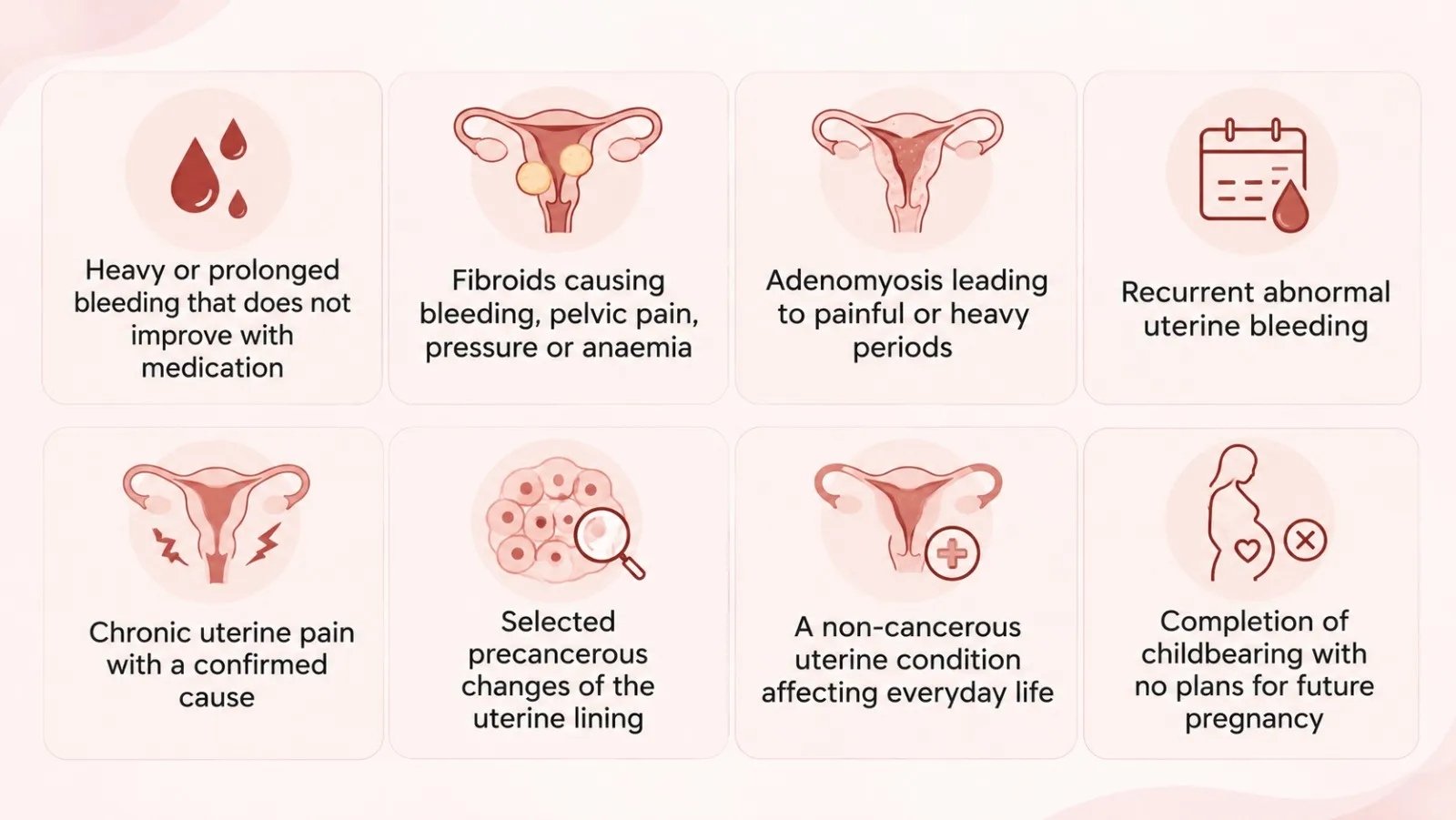
The decision depends on uterine size and mobility, previous surgeries, scan findings, and overall health.
Persistent symptoms need a clear diagnosis before surgery is considered. Connect with a gynaecologist to understand whether hysterectomy is necessary.
Which uterine conditions may eventually require hysterectomy without abdominal incision? Let’s review the common indications.
Common Gynaecological Conditions That May Require Hysterectomy
Uterine fibroids
Adenomyosis
Abnormal uterine bleeding
Endometrial hyperplasia
Chronic uterine pain
Selected precancerous conditions
Women with fibroids can also review available options for uterine fibroid management before deciding on hysterectomy treatment for fibroids.
Is NDVH suitable for every woman who needs uterus removal surgery? Let’s understand how eligibility is assessed.
Who Is Eligible for Non-Descent Vaginal Hysterectomy?
NDVH can be an option in the following conditions:

A very large uterus, suspected cancer, severe endometriosis, or extensive adhesions are some conditions which may need laparoscopic or abdominal approach.
How Is the Non-Descent Vaginal Hysterectomy Procedure Performed?
01
Anesthesia:
The procedure takes place under general anesthesia or regional anesthesia.
02
Vaginal Access:
The surgical tools are passed through the vagina without any abdominal incisions.
03
Uterine Separation:
The uterus is separated from its supporting tissues, ligaments and blood vessels.
04
Uterus Removal:
The uterus is removed through the vaginal opening. A moderately enlarged uterus can be divided into smaller sections for safe removal.
05
Vaginal Closure:
The upper end of the vagina is closed using dissolvable stitches.
06
Postoperative Monitoring:
The patient is observed for any signs of bleeding, pain, urination, and recovery from anaesthesia.
The ovaries are not usually removed in this surgery. It depends on many other factors whether ovaries need to be preserved or removed.
Understanding each step can help you prepare for surgery. Discuss the planned procedure and ovarian preservation with your gynaecologist.
Why may the vaginal route be preferred when it is clinically suitable? Let’s consider its possible advantages.
Benefits of Non-Descent Vaginal Hysterectomy
Potential benefits include:

According to Dr. Pallavi Chauhan, non-descent vaginal hysterectomy is less likely to have complications and requires less recovery time than abdominal hysterectomy when the vaginal route is feasible.
How do vaginal and abdominal hysterectomy differ? Let’s compare the two approaches.
Non-Descent Vaginal Hysterectomy vs. Abdominal Hysterectomy
| Comparison | Non-Descent Vaginal Hysterectomy (NDVH) | Abdominal Hysterectomy |
| Surgical approach | Uterus is removed through the vagina without an abdominal incision. | Uterus is removed through an incision in the abdomen. |
| When preferred | Suitable for selected cases where vaginal access is feasible. | May be considered when greater surgical access is needed, such as with a large uterus or complicated pelvic condition. |
| External scar | No visible abdominal incision or scar. | Leaves an abdominal surgical scar. |
| Postoperative pain | Generally involves less postoperative pain. | May involve more postoperative pain due to the abdominal incision. |
| Hospital stay | Usually involves a shorter hospital stay in suitable cases. | May require a longer hospital stay. |
| Recovery period | Generally allows earlier recovery and return to routine activities. | Recovery may take around 6–8 weeks. |
The broader range of approaches is explained under gynaecological surgery in Andheri East.
What should you expect during uterus removal surgery recovery? Let’s review the usual vaginal hysterectomy recovery time.
Recovery After Non-Descent Vaginal Hysterectomy
A great number of women will be allowed to go home in 1-4 days, depending on the patient’s condition and rate of recovery. Light vaginal bleeding, pelvic pain, fatigue, and changes in defecation and urination can be experienced during the initial period after the surgery.
Light physical activity is allowed, whereas lifting weights, intense exercises, and sexual intercourse must be avoided for 4-6 weeks or until the patient is declared healed. Increased body temperature, heavy bleeding, worsening pain, difficulty breathing, and foul-smelling vaginal discharge require medical attention. Recovery time after non-descent vaginal hysterectomy varies between patients.
What risks should be discussed before consenting to surgery? Let’s review the possible complications.
Possible Risks and Complications of Vaginal Hysterectomy
Possible risks include:

The individual level of risk depends on overall health, previous surgeries and the complexity of the condition.
Dr. Pallavi Chauhan's Approach to Vaginal Hysterectomy in Andheri East

Detailed Evaluation: Dr. Pallavi Chauhan reviews symptoms, the patient’s medical history, and scan reports before recommending surgery.
Consideration of Alternatives First: She considers medicines or uterus-preserving methods as an alternative option where suitable.
Selection of Surgery Route: Dr. Pallavi Chauhan selects NDVH, laparoscopic surgery, and abdominal route of surgery according to the size, mobility and condition of the uterus.
Choice of Preserving Ovaries: Decision regarding whether to preserve or remove ovaries is made after discussion based on age, symptoms and condition of ovaries.
Informed Consent: The procedure is explained to the patient along with risks involved, recovery process and other alternative options.
Postoperative Guidance: Follow-up care monitors healing and supports a gradual return to routine activities.
Recovery and surgical suitability differ for every woman. Reach out for guidance based on your examination and health history.
Frequently Asked Questions
1. What is a non-descent vaginal hysterectomy?
It is a procedure that removes a non-prolapsed uterus through the vagina without making an abdominal incision.
2. Is a non-descent vaginal hysterectomy major surgery?
Yes. Whilst NDVH is a major procedure, there is no abdominal incision and it can therefore have a quicker recovery time than open hysterectomies.
3. How long will I take to recover from a vaginal hysterectomy?
Generally, 4-6 weeks; however, this will depend on your general health, surgical findings and how quickly you recover.
4. Can I have a vaginal hysterectomy if my uterus isn’t prolapsed?
Yes. An NDVH is performed when the uterus is in its normal position and therefore vaginal hysterectomy is deemed to be safe.
5. What conditions can a non-descent vaginal hysterectomy be used for?
Fibroids, adenomyosis, ongoing abnormal bleeding, chronic pelvic pain and select benign gynaecological conditions.
6. What are the possible risks of vaginal hysterectomy?
Bleeding, infection, clotting, anaesthetic complications and injury to surrounding organs, including the bladder, ureter, and bowel.
Disclaimer: The information shared on this page is for educational purposes and not for promotional use.