

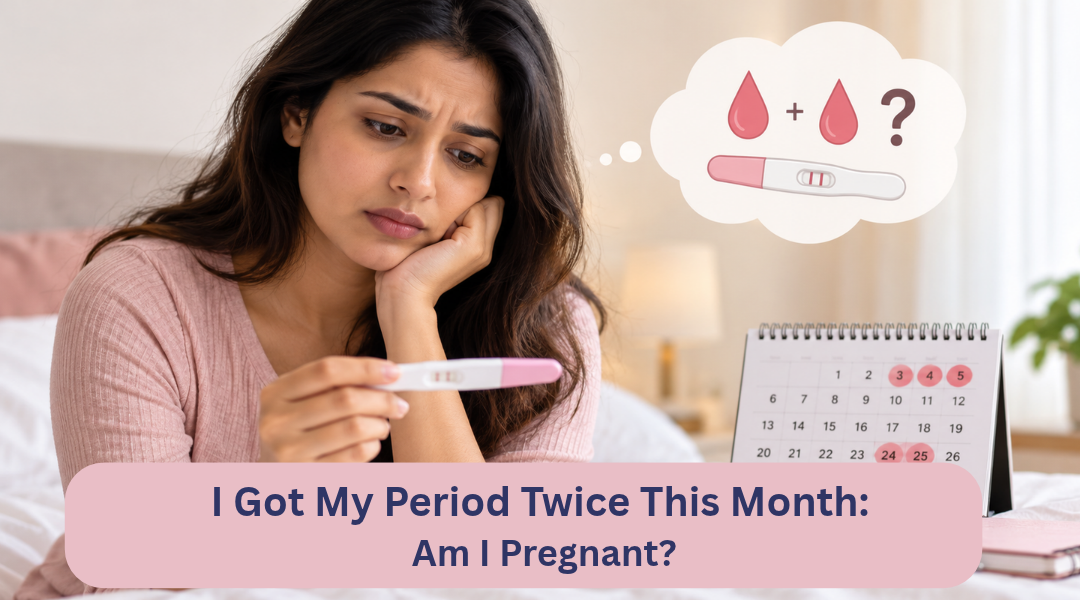
I Got My Period Twice This Month: Am I Pregnant?
When you experience your period twice in a month, the first thing that comes to mind is pregnancy, but you are not sure how to know that the bleeding is not an additional period. To find out the reason behind double menstruation, it is essential to understand your menstrual cycle and the factors causing this issue.
According to Dr. Pallavi Chauhan, an esteemed Gynecologist in Andheri East, the bleeding patterns may vary due to many reasons, such as hormonal issues, stress, or reproductive problems. It is important to understand the timing of the bleeding, the nature of the blood flow, and any other accompanying symptoms to find out its root cause.
Dr. Pallavi Chauhan is a seasoned gynecologist with more than 10 years of experience. She is a specialist in managing issues concerning the reproductive system of women, including menstrual cycles and hormonal imbalance, PCOS, and other pregnancy-related problems.
So, can two episodes of bleeding in one month indicate pregnancy? Let’s explore the possible explanations.
Is Getting Your Period Twice in One Month a Sign of Pregnancy?
Getting your periods twice a month is not necessarily an indication of being pregnant. In a typical menstrual cycle without pregnancy, menstrual periods come about when the body sheds the uterine lining. However, there are many women who tend to experience bleeding early in their pregnancies that resembles a period.
If you have had unprotected intercourse, pregnancy remains a possibility, particularly when the second bleeding episode is lighter or shorter than usual.
Possible pregnancy-related explanations include:
- Early pregnancy spotting: Bleeding may take place about the same time your period would begin.
- Cervical changes: An increase in the blood supply to your cervix due to your pregnancy may cause spotting, particularly after intercourse.
- Pregnancy complications: You may get some type of bleeding due to miscarriage or ectopic pregnancy, requiring medical assessment.
Thus, can getting your period twice in one month mean pregnancy? It depends on what type of bleeding it is.
You can do a home pregnancy test for further clarification.
What Causes Bleeding Twice in One Month?
If you’re wondering why did I get my period twice this month, there are various reasons. There are some which are temporary, and others may need professional attention.
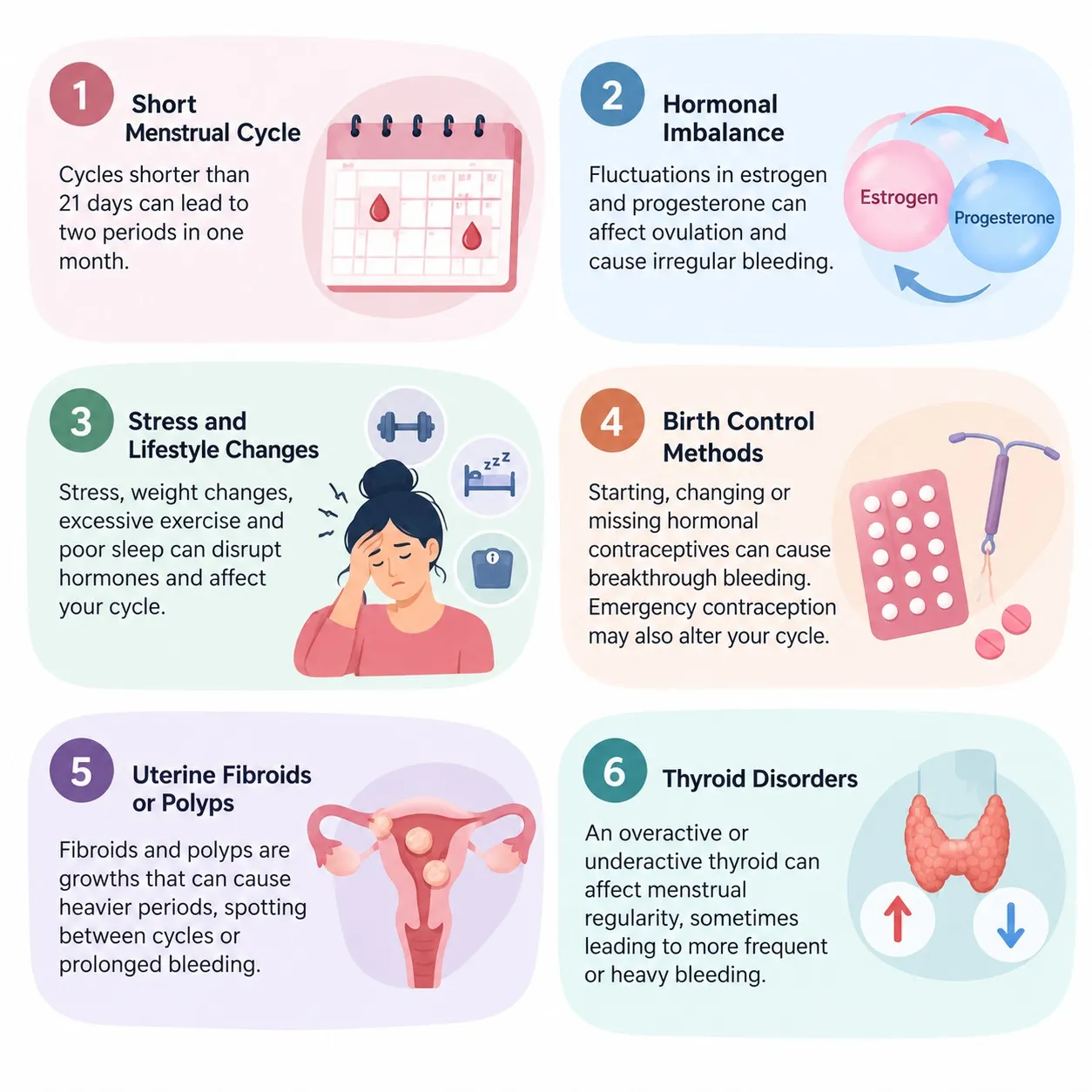
Knowing what causes bleeding twice in one month is necessary especially when the same continues or is accompanied by pain.
How Can You Tell the Difference Between Periods and Pregnancy Bleeding?
| Feature | Menstrual Period | Possible Early Pregnancy Spotting |
| Flow | Usually light to heavy | Often light spotting |
| Duration | Commonly 2–7 days | Often brief or intermittent |
| Colour | Red to dark brown | Pink, brown, or red |
| Cramping | May include menstrual cramps | May occur with mild discomfort |
| Pregnancy test | Usually negative without pregnancy | May become positive after sufficient hCG develops |
These differences are general patterns rather than diagnostic rules. Some pregnancy-related bleeding can be heavy, and light spotting can occur without pregnancy.
If you are wondering how to know if bleeding is a period or pregnancy spotting, consider the timing of intercourse, your expected period, and a properly timed pregnancy test.
When Should You Take a Pregnancy Test?
A pregnancy test works by measuring human chorionic gonadotropin (hCG) hormone which is released when one is pregnant.
For reliable results, consider the following:
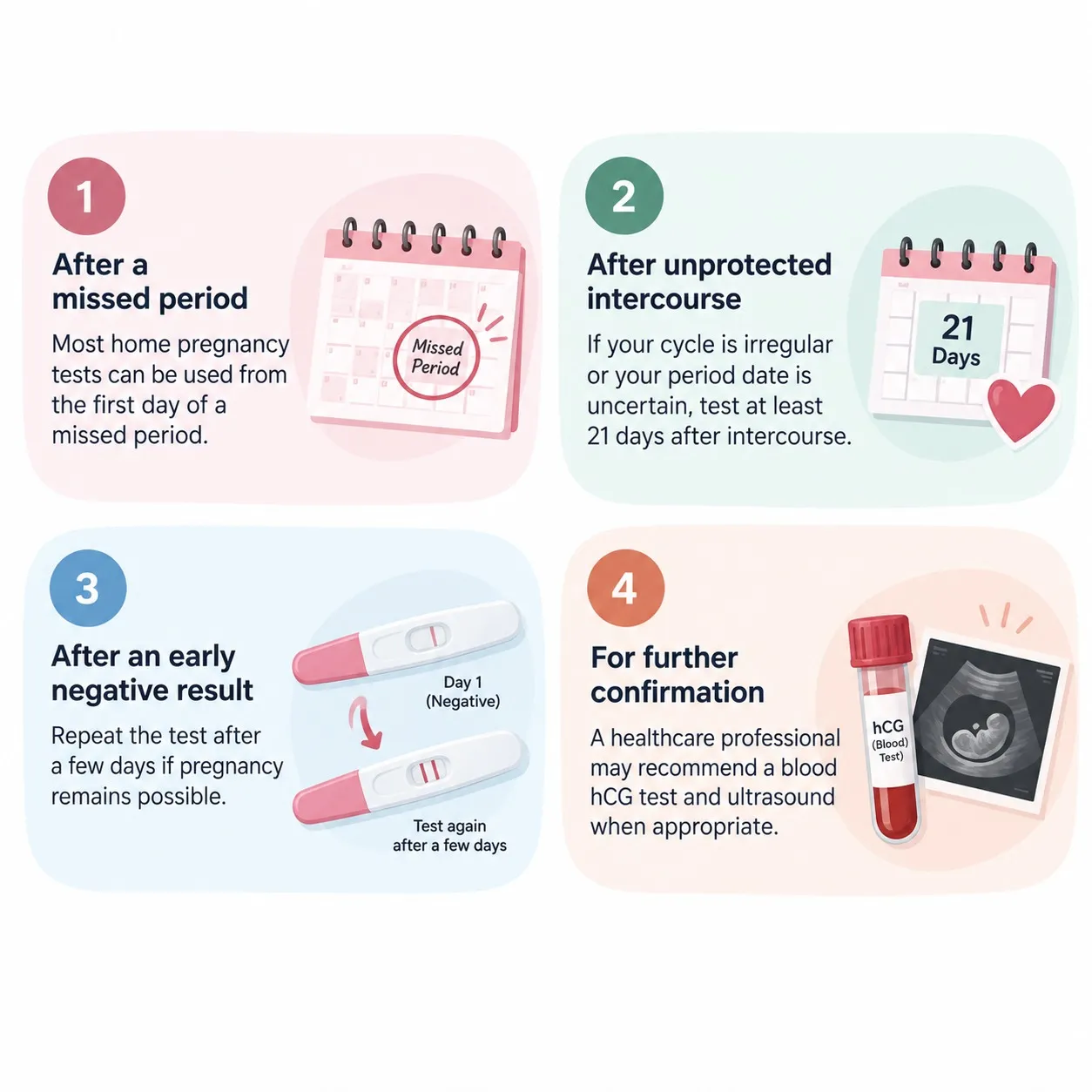
Testing your first morning urine may increase the effectiveness of testing early in pregnancy.
A positive result together with bleeding should be discussed with a healthcare provider.
Can PCOS or Hormonal Changes Cause Two Periods in One Month?
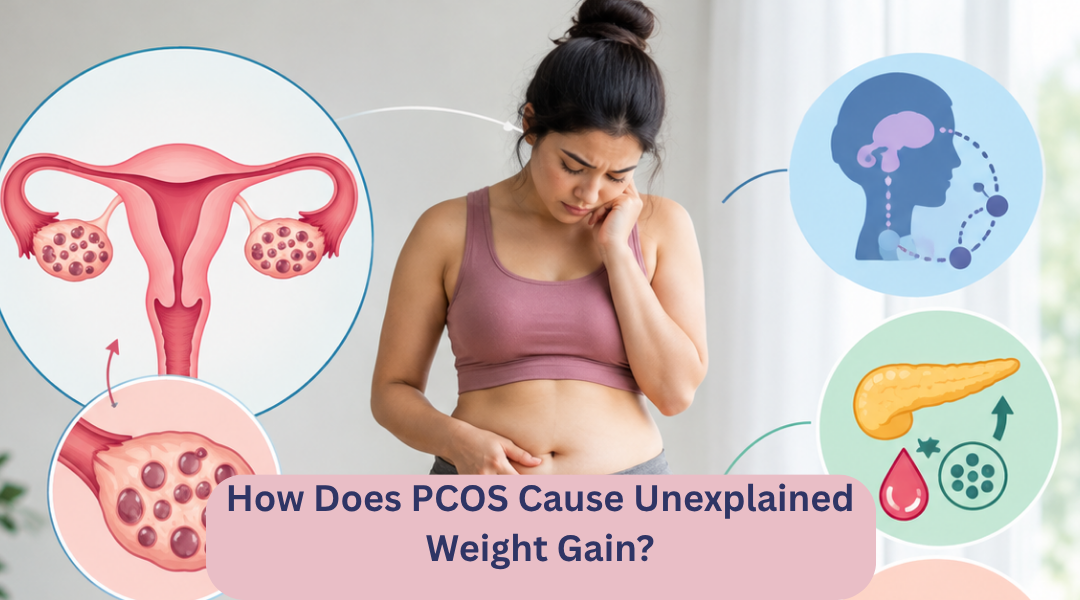
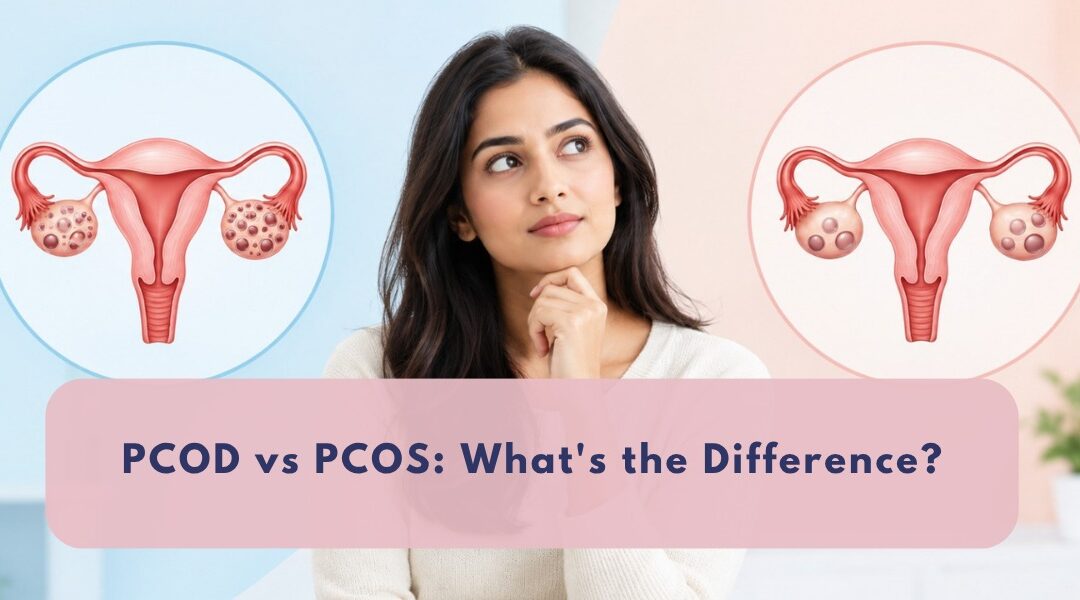
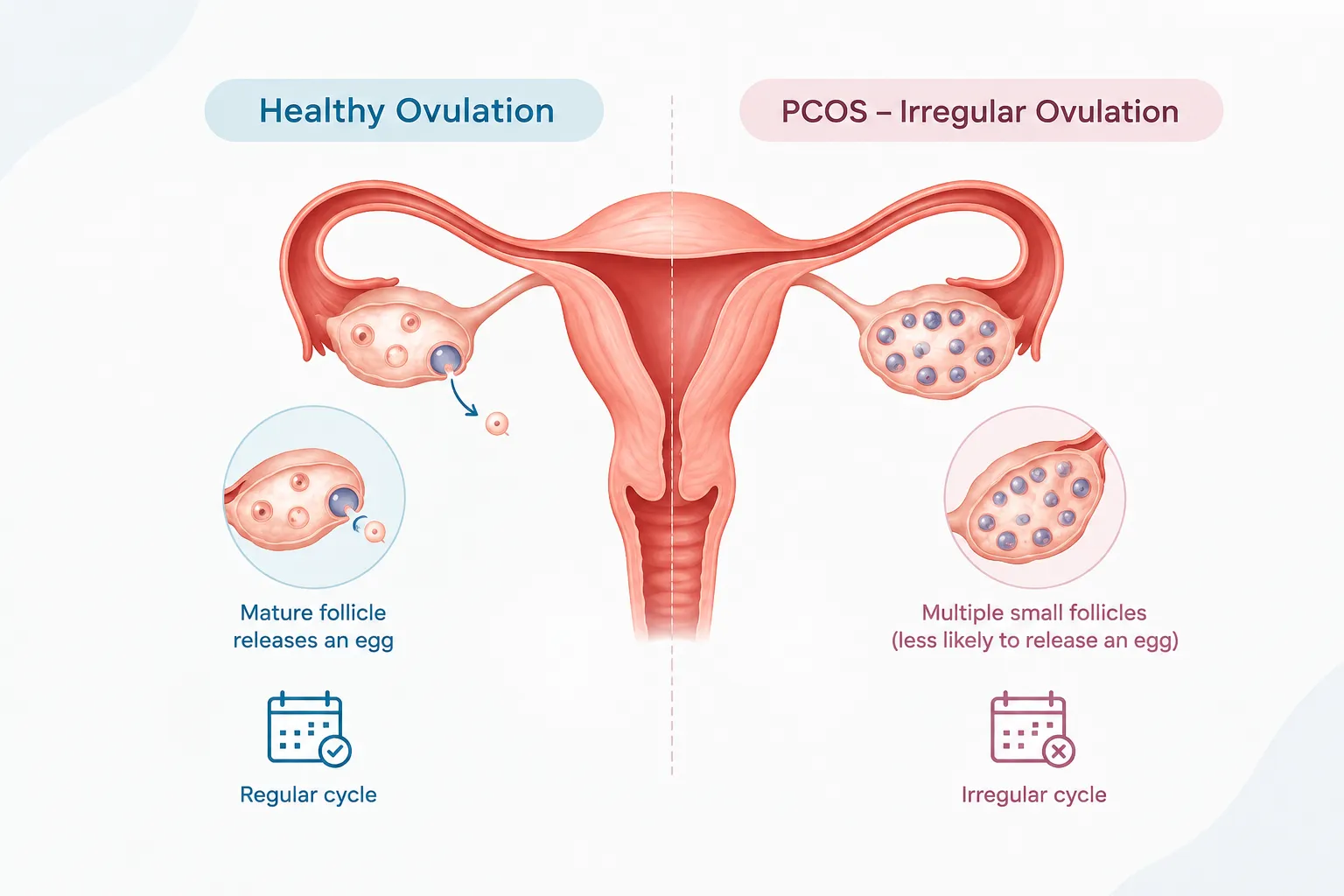
Yes. PCOS and hormonal imbalance can lead to irregular periods and pregnancy issues since ovulation and menstrual periods are influenced by them.
Women with PCOS might have their menstrual period delayed or unpredictable bleeding or menstruation. Sometimes hormonal changes might lead to shedding the lining of uterus in an irregular fashion.
Other factors include:
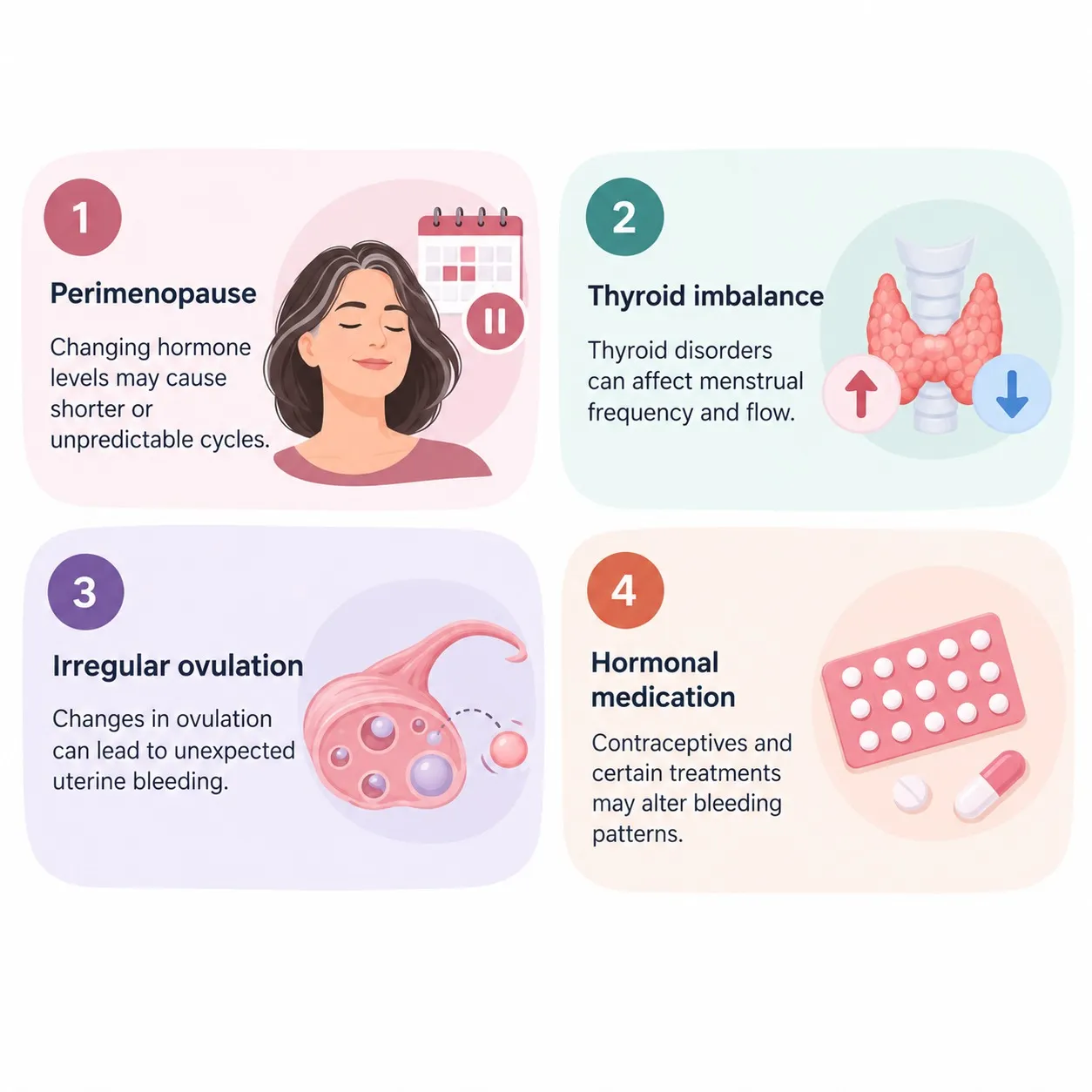
For women experiencing two periods in one month, identifying the underlying hormonal cause helps guide appropriate treatment.
When Should You Consult a Gynecologist?
Some changes in menstruation are normal, but recurring or abnormal bleeding needs medical attention. A gynecologist will examine your symptoms, menstrual pattern, and chances of pregnancy to determine the cause.
It’s wise to schedule an appointment in case you have:
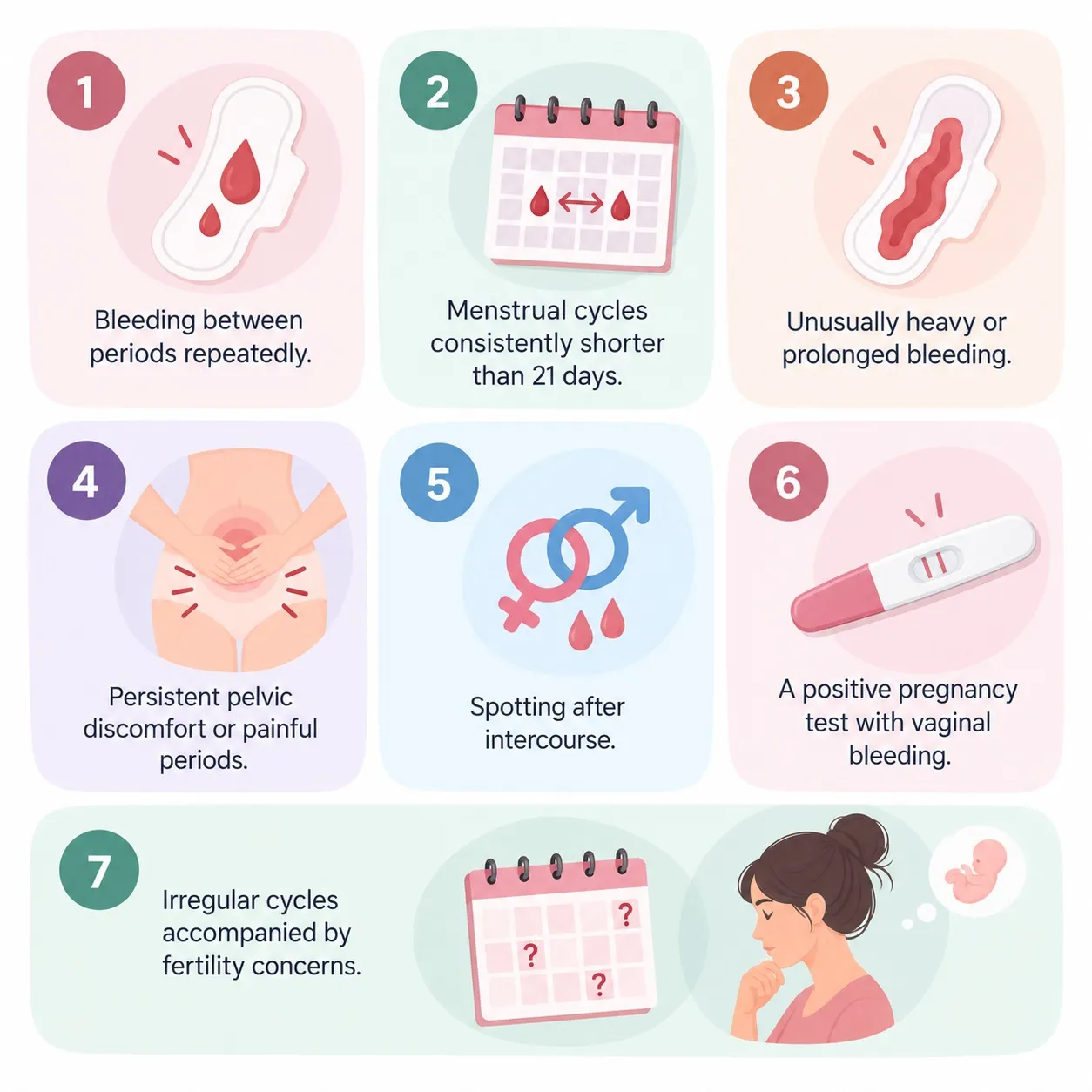
Go to the nearest hospital for serious abdominal pain, shoulder tip pain, fainting, extreme dizziness, or excessive bleeding, especially if there is a chance of pregnancy. Such symptoms may be due to heavy bleeding or ectopic pregnancy.
Dr. Pallavi Chauhan can assist you with your menstrual problems, hormonal issues, and pregnancy complications.
FAQ's
Can I be pregnant if I had two periods in one month?
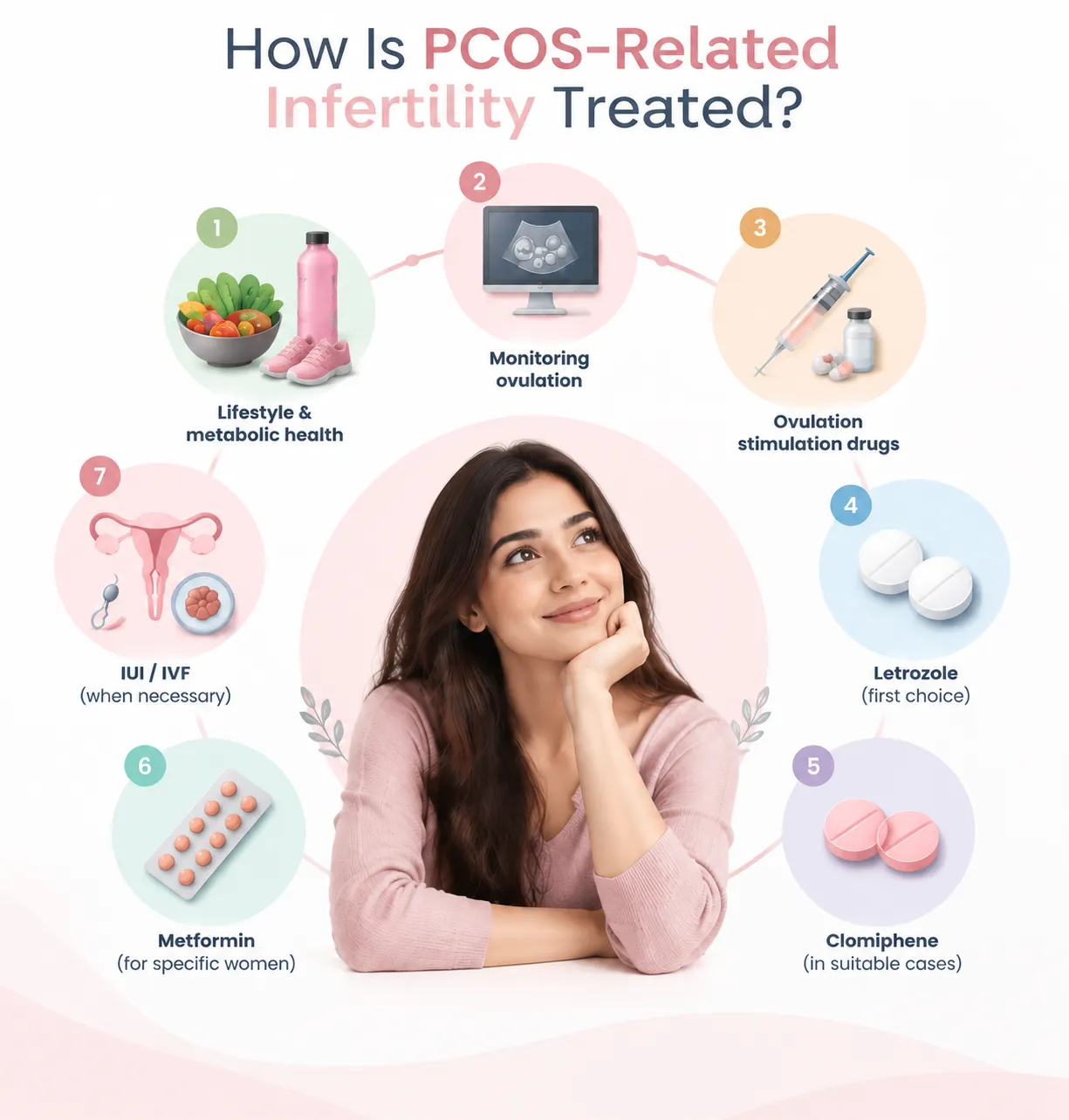
Can lifestyle changes alone help me conceive with PCOS?
Two bleedings per month might be caused by menstrual irregularity, hormone imbalance, stress, contraception, PCOS, uterine problems, among others.
Is it normal to bleed two times a month?
There is an occasional possibility; especially with shorter cycles. However, repeated bleeding during the menstrual cycle should be checked with a doctor.
Can implantation bleeding be confused for second period?
Implantation bleeding is a symptom of early pregnancy. But colour, time and other factors are not enough to establish implantation as the cause.
Can I take pregnancy test during bleeding?
Yes, vaginal bleeding is not an obstacle for the urine test to show hCG levels. Test results depend primarily on testing time.
Can PCOS cause periods twice a month?
Yes, polycystic ovarian syndrome can affect ovulation leading to irregular and abnormal bleeding. In some cases, patients miss their period.
References:
https://www.healthline.com/health/womens-health/two-periods-in-one-month
https://www.medicalnewstoday.com/articles/322252
Disclaimer: The information shared in this content is for educational purposes and not for promotional use.