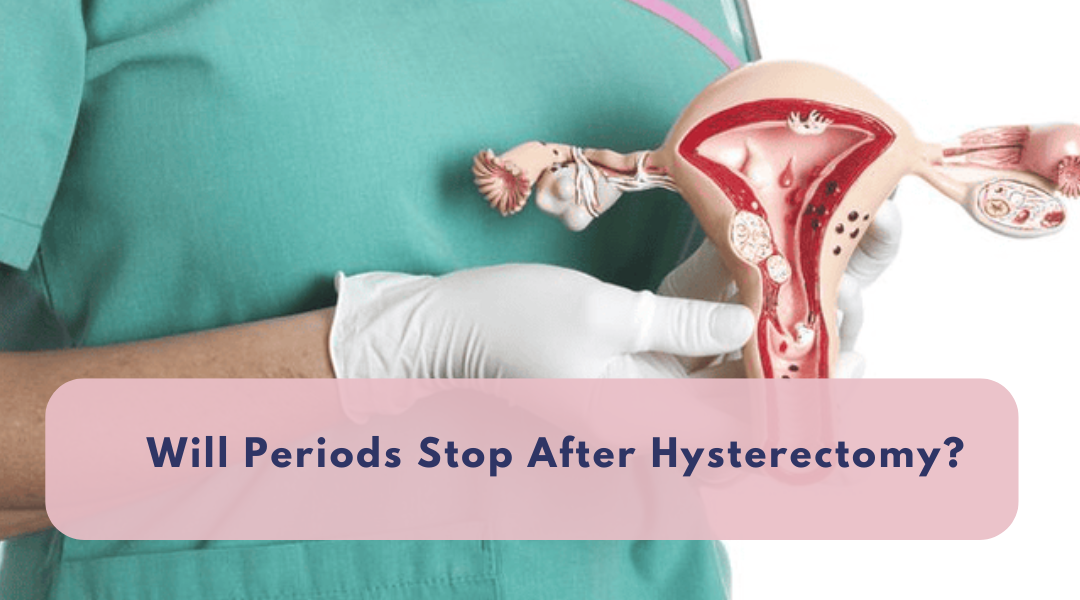
Hysterectomy ends monthly bleeding right away since the womb itself, which sheds blood each cycle, gets removed. Light pinkish or brown spotting often carries on for two to six weeks as tissue inside heals. Ovaries kept in place still produce hormones, yet no period comes back.
According to Dr. Pallavi Chauhan, Consultant Obstetrician andGynaecologist in Andheri East, “Half my post-op calls are women panicking over spotting. hat’s healing discharge,not a period.Uterus is gone, so bleeding won’t return.”
What Actually Happens to Bleeding Right After Surgery?
Women often muddle up healing discharge with an actual period. Quick breakdown below.
Day one onward: Uterus gone means source of blood gone too. So no period, ever again.
Light spotting: Pink or brown discharge carries on roughly two to six weeks. Internal stitches are still settling down.
Silent hormones: Ovaries intact? Expect monthly PMS moods, sore breasts, mild cramps, minus the actual bleed.
Bleeding past six weeks isn’t healing anymore.Ring the clinic.
How Do Your Ovaries Change Everything After Hysterectomy?
Whether your surgeon kept ovaries or removed them shapes how recovery actually feels day to day.
Ovaries retained: Hormones tick along as before. Natural menopause lands somewhere between age 45 and 55.
Ovaries out: Surgical menopause hits fast.Hot flushes, night sweats can start within days, not weeks.
Hormonal echoes: Bloating, mood swings, tender breasts still appear cyclically when ovaries keep working.
Late bleeding: Spotting years down the line needs the same urgent workup aspostmenopausal bleeding.
For younger women losing both ovaries, HRT usually enters the chat.
Why Choose Dr. Pallavi Chauhan for Hysterectomy in Andheri East?
Dr. Pallavi Chauhan brings more than a decade of hands-on work in laparoscopic and hysteroscopic hysterectomy, operating out of Mangala Hospital, Seven Hills, Criticare Asia, and several other Andheri East facilities. Her qualifications: MBBS, MS OBGY, DNB, plus MRCOG from London.
Pre-op chats stretch. Women leave knowing what bleeding looks fine, when hormones flip, and which warning signs warrant a call. No woolly reassurances, no textbook speak. That’s exactly why patients keep sending their sisters, cousins, and neighbours her way.
FAQs
Will I get periods again after hysterectomy?
No, periods stop for good. Uterus is gone so monthly bleeding cannot restart.
How long does bleeding last after hysterectomy?
Light spotting usually runs two to six weeks while internal stitches heal up.
Do ovaries still work after hysterectomy?
Yes, if kept they carry on releasing eggs and hormones. Eggs simply get reabsorbed.
Will I hit menopause right after surgery?
Only if both ovaries come out. Keep them, natural menopause arrives at usual age.
Is bleeding years after hysterectomy serious?
Yes, always. Any vaginal bleeding long after surgery needs urgent gynaec review.
Bleeding that occurs ten years or more after menopause is called postmenopausal bleeding and is never considered normal. Even a single spot demands evaluation. Causes range from vaginal atrophy and polyps to endometrial hyperplasia, and in roughly 10 per cent of cases, uterine or cervical cancer.
According to Dr. Pallavi Chauhan, Consultant Obstetrician and Gynaecologist in Andheri East, “When a woman bleeds a decade after her periods stopped, I treat it as a red flag until transvaginal ultrasound and endometrial sampling prove otherwise.”
Noticed spotting recently? Book a priority gynaec consultation today.
How Is Postmenopausal Bleeding Diagnosed and Treated?
Workup is systematic. And quick. Because the goal is to exclude cancer early while treating benign causes comfortably.
Transvaginal ultrasound first: Measures endometrial thickness. Anything above 4 mm in a postmenopausal woman usually needs further sampling.
Hysteroscopy with biopsy: A thin camera inspects the uterine cavity directly. Tiny polyps can be removed in the same sitting.
Pap smear and HPV testing: Done alongside to rule out cervical causes, especially if the last screening is overdue.
Treatment depends on findings: Vaginal estrogen cream for atrophy, polypectomy for polyps, progesterone or hysterectomy for hyperplasia, and oncology referral if malignancy is confirmed.
Most women walk out with a clear answer after one or two visits. Early action almost always means easier treatment.
Why Choose Dr Pallavi Chauhan
Dr. Pallavi Chauhan is a Consultant Obstetrician and Gynaecologist with over 10 years of experience, specialising in minimally invasive hysteroscopy and having managed thousands of complex gynaecological cases across leading Andheri East hospitals.
Her approach is unhurried. You get a proper examination, a same-day ultrasound plan where possible, and a diagnosis explained in plain language, not medical jargon that leaves you Googling at midnight.
Take charge of your health today. Schedule your appointment now.