


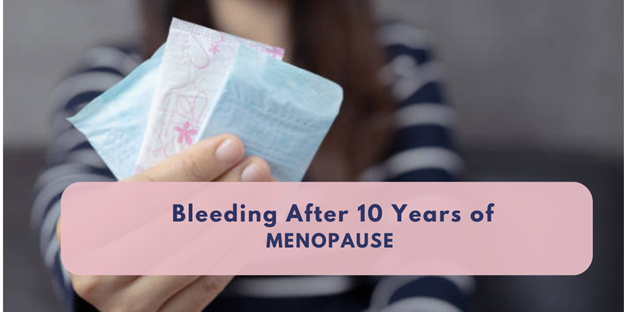
Bleeding that occurs ten years or more after menopause is called postmenopausal bleeding and is never considered normal. Even a single spot demands evaluation. Causes range from vaginal atrophy and polyps to endometrial hyperplasia, and in roughly 10 per cent of cases, uterine or cervical cancer.
According to Dr. Pallavi Chauhan, Consultant Obstetrician and Gynaecologist in Andheri East, “When a woman bleeds a decade after her periods stopped, I treat it as a red flag until transvaginal ultrasound and endometrial sampling prove otherwise.”

What Causes Bleeding So Long After Menopause?
Late postmenopausal bleeding has several possible triggers, and pinpointing the exact one needs a clinical workup.
- Atrophic vaginitis: Thin, fragile vaginal tissue from low estrogen bleeds easily after intercourse or straining. Most common cause overall.
- Endometrial or cervical polyps: Small growths inside the uterus or on the cervix that can bleed intermittently.
- Endometrial hyperplasia: A thickened uterine lining, sometimes linked to obesity, diabetes, or tamoxifen use, and occasionally precancerous.
- Endometrial cancer: The most serious cause. Risk climbs with age, which is why bleeding this late cannot be ignored.
How Is Postmenopausal Bleeding Diagnosed and Treated?

Workup is systematic. And quick. Because the goal is to exclude cancer early while treating benign causes comfortably.
- Transvaginal ultrasound first: Measures endometrial thickness. Anything above 4 mm in a postmenopausal woman usually needs further sampling.
- Hysteroscopy with biopsy: A thin camera inspects the uterine cavity directly. Tiny polyps can be removed in the same sitting.
- Pap smear and HPV testing: Done alongside to rule out cervical causes, especially if the last screening is overdue.
- Treatment depends on findings: Vaginal estrogen cream for atrophy, polypectomy for polyps, progesterone or hysterectomy for hyperplasia, and oncology referral if malignancy is confirmed.
Most women walk out with a clear answer after one or two visits. Early action almost always means easier treatment.
Why Choose Dr Pallavi Chauhan
Dr. Pallavi Chauhan is a Consultant Obstetrician and Gynaecologist with over 10 years of experience, specialising in minimally invasive hysteroscopy and having managed thousands of complex gynaecological cases across leading Andheri East hospitals.
Her approach is unhurried. You get a proper examination, a same-day ultrasound plan where possible, and a diagnosis explained in plain language, not medical jargon that leaves you Googling at midnight.
FAQs
Is any bleeding after 10 years of menopause dangerous?
Can stress or diet cause bleeding this late after menopause?
How soon should I see a doctor after spotting?
Does postmenopausal bleeding always mean cancer?
Is hysteroscopy painful for postmenopausal women?
