

Call gynecologist

Call

9967482300

Email Dr Pallavi Chauhan

Email Address

drpallavi.ms.obgy@gmail.com

I Got My Period Twice This Month: Am I Pregnant?

I Got My Period Twice This Month: Am I Pregnant?

When you experience your period twice in a month, the first thing that comes to mind is pregnancy, but you are not sure how to know that the bleeding is not an additional period. To find out the reason behind double menstruation, it is essential to understand your menstrual cycle and the factors causing this issue.

According to Dr. Pallavi Chauhan, an esteemed Gynecologist in Andheri East, the bleeding patterns may vary due to many reasons, such as hormonal issues, stress, or reproductive problems. It is important to understand the timing of the bleeding, the nature of the blood flow, and any other accompanying symptoms to find out its root cause.

Dr. Pallavi Chauhan is a seasoned gynecologist with more than 10 years of experience. She is a specialist in managing issues concerning the reproductive system of women, including menstrual cycles and hormonal imbalance, PCOS, and other pregnancy-related problems.

So, can two episodes of bleeding in one month indicate pregnancy? Let’s explore the possible explanations.

Is Getting Your Period Twice in One Month a Sign of Pregnancy?

Getting your periods twice a month is not necessarily an indication of being pregnant. In a typical menstrual cycle without pregnancy, menstrual periods come about when the body sheds the uterine lining. However, there are many women who tend to experience bleeding early in their pregnancies that resembles a period.

If you have had unprotected intercourse, pregnancy remains a possibility, particularly when the second bleeding episode is lighter or shorter than usual.

Possible pregnancy-related explanations include:

  • Early pregnancy spotting: Bleeding may take place about the same time your period would begin.
  • Cervical changes: An increase in the blood supply to your cervix due to your pregnancy may cause spotting, particularly after intercourse.
  • Pregnancy complications: You may get some type of bleeding due to miscarriage or ectopic pregnancy, requiring medical assessment.

Thus, can getting your period twice in one month mean pregnancy? It depends on what type of bleeding it is.

You can do a home pregnancy test for further clarification.

What Causes Bleeding Twice in One Month?

If you’re wondering why did I get my period twice this month, there are various reasons. There are some which are temporary, and others may need professional attention.
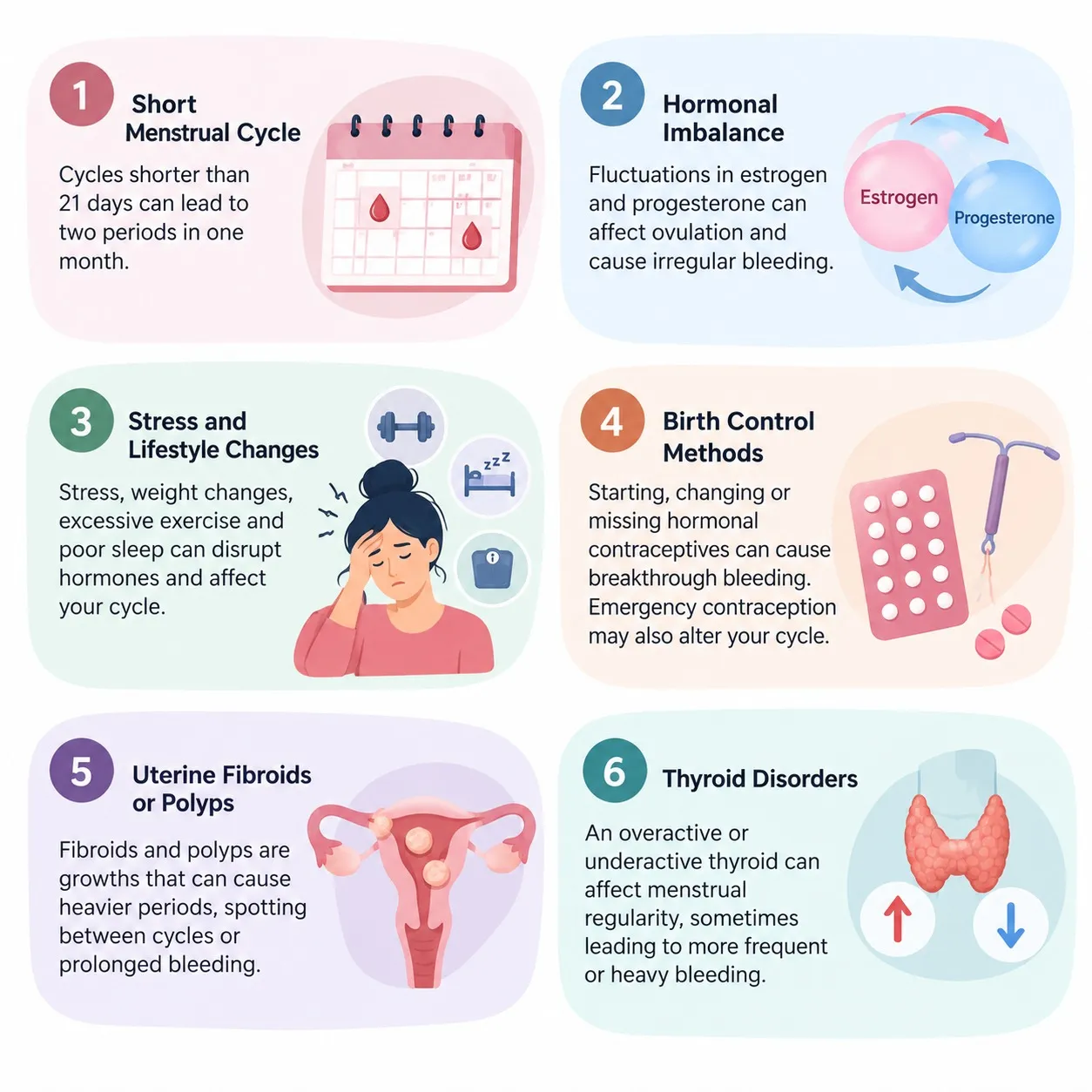
Panel 1: Short menstrual cycle—cycles under 21 days can lead to two periods in one month.

Knowing what causes bleeding twice in one month is necessary especially when the same continues or is accompanied by pain.

Experiencing unexpected changes in your menstrual cycle? Get in touch with a specialist to understand the possible causes.

How Can You Tell the Difference Between Periods and Pregnancy Bleeding?

Distinguishing implantation bleeding vs period can be challenging because both may occur around the expected menstrual date. Bleeding appearance alone cannot reliably confirm pregnancy.

Feature Menstrual Period Possible Early Pregnancy Spotting
Flow Usually light to heavy Often light spotting
Duration Commonly 2–7 days Often brief or intermittent
Colour Red to dark brown Pink, brown, or red
Cramping May include menstrual cramps May occur with mild discomfort
Pregnancy test Usually negative without pregnancy May become positive after sufficient hCG develops

These differences are general patterns rather than diagnostic rules. Some pregnancy-related bleeding can be heavy, and light spotting can occur without pregnancy.

If you are wondering how to know if bleeding is a period or pregnancy spotting, consider the timing of intercourse, your expected period, and a properly timed pregnancy test.

When Should You Take a Pregnancy Test?

A pregnancy test works by measuring human chorionic gonadotropin (hCG) hormone which is released when one is pregnant.

For reliable results, consider the following:
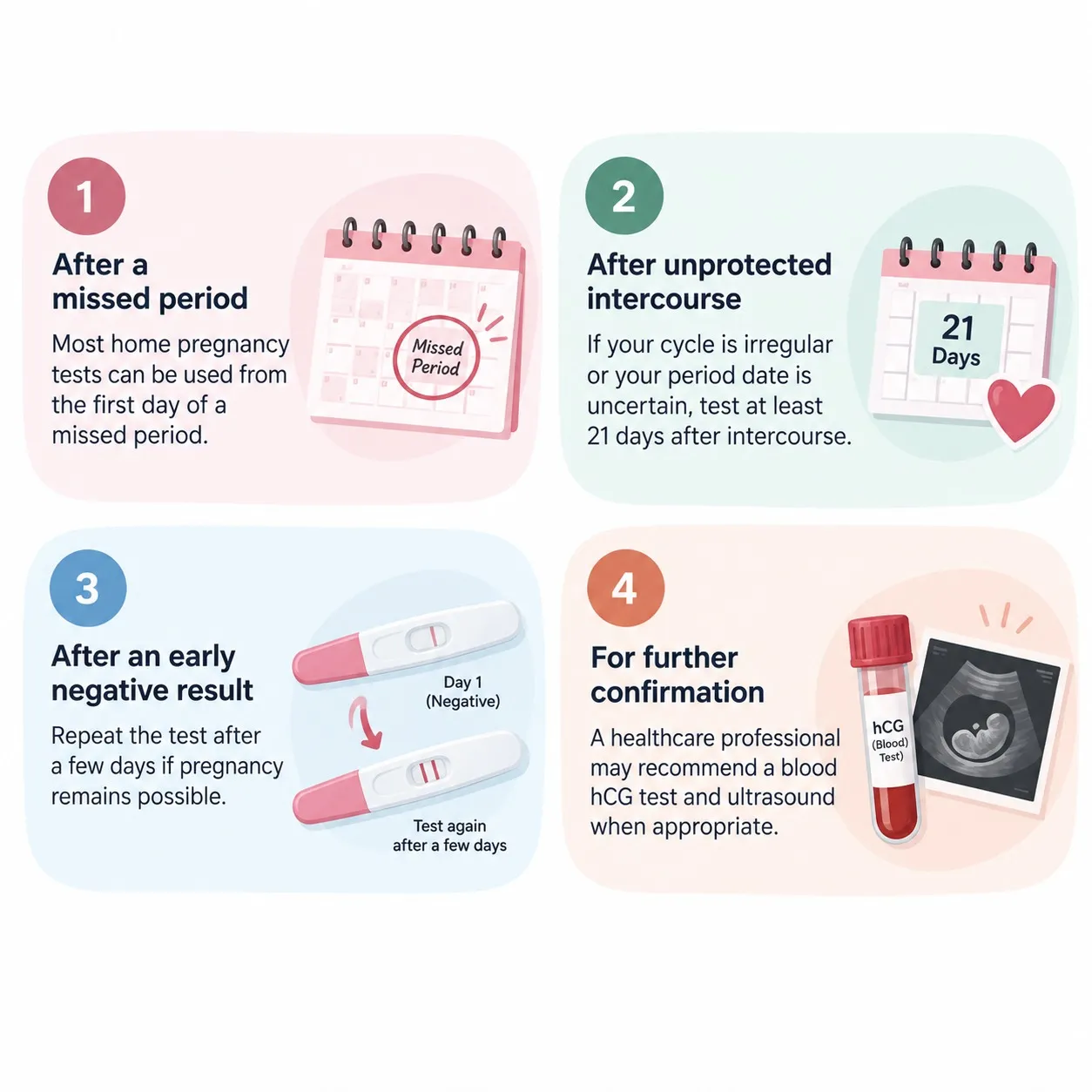
Four-panel infographic showing steps for pregnancy testing: missed period, 21 days after intercourse, retesting after a negative result, and medical confirmation options.

Testing your first morning urine may increase the effectiveness of testing early in pregnancy.

A positive result together with bleeding should be discussed with a healthcare provider.

Can PCOS or Hormonal Changes Cause Two Periods in One Month?

Yes. PCOS and hormonal imbalance can lead to irregular periods and pregnancy issues since ovulation and menstrual periods are influenced by them.

Women with PCOS might have their menstrual period delayed or unpredictable bleeding or menstruation. Sometimes hormonal changes might lead to shedding the lining of uterus in an irregular fashion.

Other factors include:
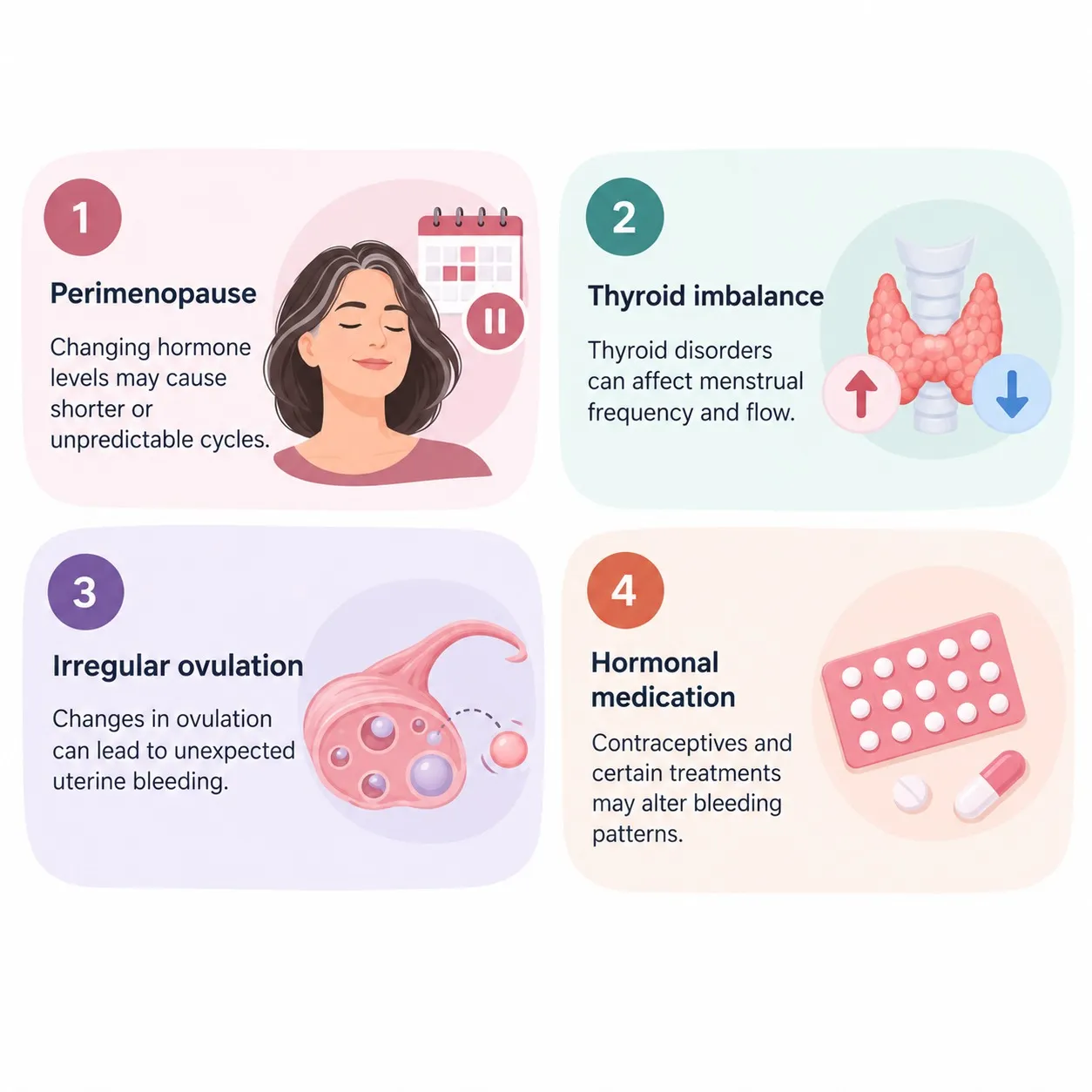
Panel 1: Perimenopause — text explains changing hormone levels may cause shorter or unpredictable cycles, with a woman resting beside a calendar icon.

For women experiencing two periods in one month, identifying the underlying hormonal cause helps guide appropriate treatment.

When Should You Consult a Gynecologist?

Some changes in menstruation are normal, but recurring or abnormal bleeding needs medical attention. A gynecologist will examine your symptoms, menstrual pattern, and chances of pregnancy to determine the cause.

It’s wise to schedule an appointment in case you have:
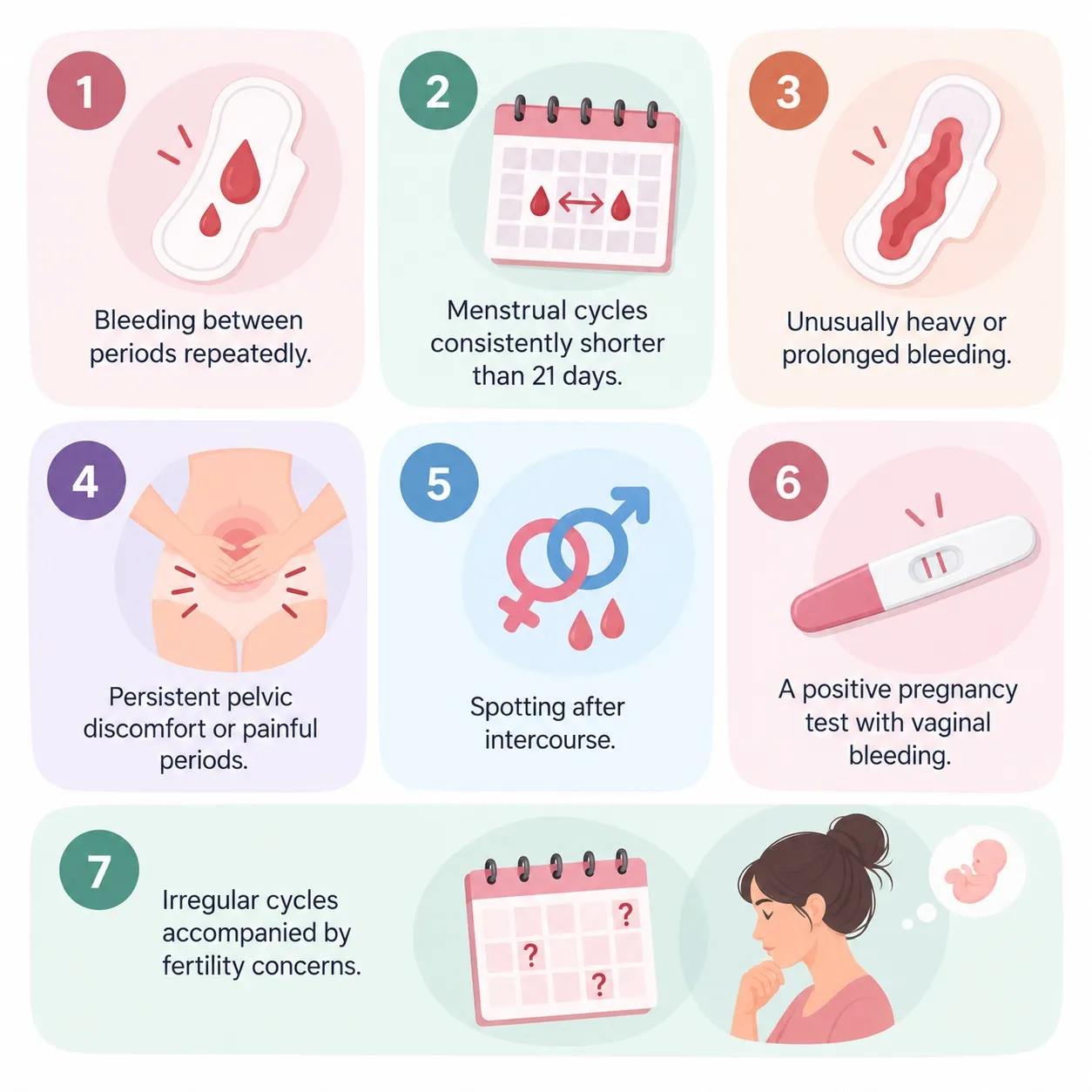
Bleeding between periods repeatedly.

Go to the nearest hospital for serious abdominal pain, shoulder tip pain, fainting, extreme dizziness, or excessive bleeding, especially if there is a chance of pregnancy. Such symptoms may be due to heavy bleeding or ectopic pregnancy.

Dr. Pallavi Chauhan can assist you with your menstrual problems, hormonal issues, and pregnancy complications.

Concerned about unexpected menstrual bleeding? Connect with an experienced specialist for timely evaluation and personalized guidance.

FAQ's

Can I be pregnant if I had two periods in one month?

Yes, pregnancy is still possible in case one period turned out to be bleeding due to pregnancy, not because of menstruation. It is possible to determine pregnancy with a test.

Can lifestyle changes alone help me conceive with PCOS?


Two bleedings per month might be caused by menstrual irregularity, hormone imbalance, stress, contraception, PCOS, uterine problems, among others.

Is it normal to bleed two times a month?

There is an occasional possibility; especially with shorter cycles. However, repeated bleeding during the menstrual cycle should be checked with a doctor.

Can implantation bleeding be confused for second period?

Implantation bleeding is a symptom of early pregnancy. But colour, time and other factors are not enough to establish implantation as the cause.

Can I take pregnancy test during bleeding?

Yes, vaginal bleeding is not an obstacle for the urine test to show hCG levels. Test results depend primarily on testing time.

Can PCOS cause periods twice a month?

Yes, polycystic ovarian syndrome can affect ovulation leading to irregular and abnormal bleeding. In some cases, patients miss their period.

References:

https://www.healthline.com/health/womens-health/two-periods-in-one-month

https://www.medicalnewstoday.com/articles/322252

Disclaimer: The information shared in this content is for educational purposes and not for promotional use.
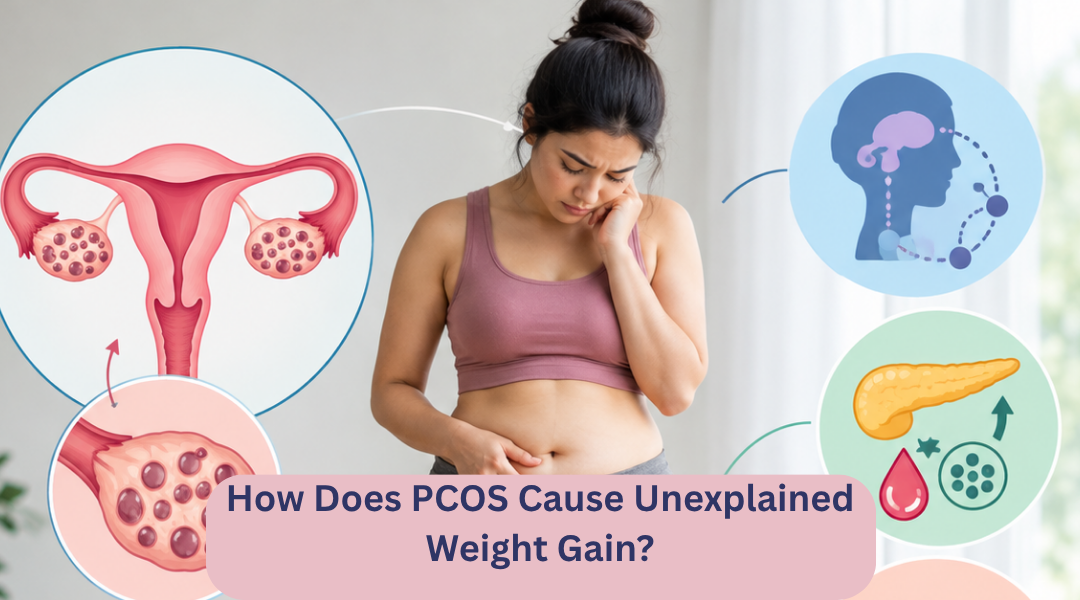
How Does PCOS Cause Unexplained Weight Gain?

How Does PCOS Cause Unexplained Weight Gain?

Many women with PCOS notice the scale going up even when they haven’t changed what they eat or how much they move. It isn’t a lack of effort. With PCOS the body doesn’t respond well to insulin, the hormones are out of balance, and the metabolism ends up holding on to more energy than it uses.

According to Dr. Pallavi Chauhan, an expert in PCOD & PCOS treatment in Andheri East, “PCOS is manageable, and most women can work towards a steadier hormonal balance with the right treatment plan.”

Worried about PCOS weight gain?

Why does PCOS cause weight gain?

Roughly one in eight women of reproductive age has PCOS,Not everyone with it gains weight, and plenty of women are lean. For those who do put on weight, insulin is usually at the centre of it.

Here’s how it goes. Cells stop responding to insulin the way they should, so the body keeps making more. All that insulin makes it easier to store fat. It also nudges the ovaries into making more androgens (the male hormones every woman has in small amounts), and those seem to push fat towards the belly. More belly fat means more insulin resistance, so it feeds itself. Bad sleep and stress make it worse.

It can also begin the other way round. A woman who is genetically prone to PCOS may put on weight first,which can trigger or worsen the condition, and make its onset feel sudden. . And despite the name, PCOS isn’t only about cysts on the ovaries. This blog on bilateral ovarian cysts and fertility explains the connection in more detail.


Weight gain doesn’t always mean PCOS. Thyroid trouble, some medicines, pregnancy, and the years before menopause can cause it as well, so your doctor will check for those first

For more information about PCOS and weight management.

What helps with PCOS weight gain?

Lifestyle is where every guideline starts, and nobody is asking for a huge change. Stopping further gain is a good first goal. If you’re carrying extra weight, losing 5 to 10 percent already helps: insulin works better, hormone levels settle, and periods often become more regular. No single diet is the best one, so choose something you can keep doing, and add some activity you actually like. When that isn’t enough, your doctor might add a medicine like metformin. That is their call to make, so don’t start it on your own.

Weight also matters for the long run. Extra weight with insulin resistance raises the chances of type 2 diabetes and high cholesterol, and heart disease risk goes up too. 

Go and see a gynaecologist if your periods stay irregular for a few months, if you’re gaining weight along with acne or unwanted hair, or if you’re finding it hard to conceive. 

Why choose Dr. Pallavi Chauhan for PCOS treatment in Andheri East?

Dr. Pallavi Chauhan is a Consultant Obstetrician and Gynaecologist in Andheri East with over ten years of experience (MBBS, MS, DNB, MRCOG). PCOS and menstrual health are among her main areas of work. She builds the plan around your age, your symptoms and what you’re hoping for, whether that’s lifestyle advice, regular periods, skin and hair concerns, getting pregnant, or keeping an eye on your blood sugar and thyroid. If you’d like to talk it through, book an appointment

FAQ's

Can PCOS cause weight gain even if I eat well?

Yes, insulin resistance makes fat easier to store and harder to lose, but it’s worth getting your thyroid checked too.

Can you have PCOS and still be lean?

Yes, it’s diagnosed from your periods, signs of high androgens and the ovaries, not from your weight.

Will losing weight cure PCOS?

There’s no permanent cure, but losing even a little weight often makes symptoms easier.

Does PCOS weight gain affect fertility?

It can, because ovulation gets irregular, but many women still conceive, sometimes with infertility treatment support.

References


Disclaimer:This blog is intended for general information only and does not replace a personal consultation with a qualified gynaecologist. 

.

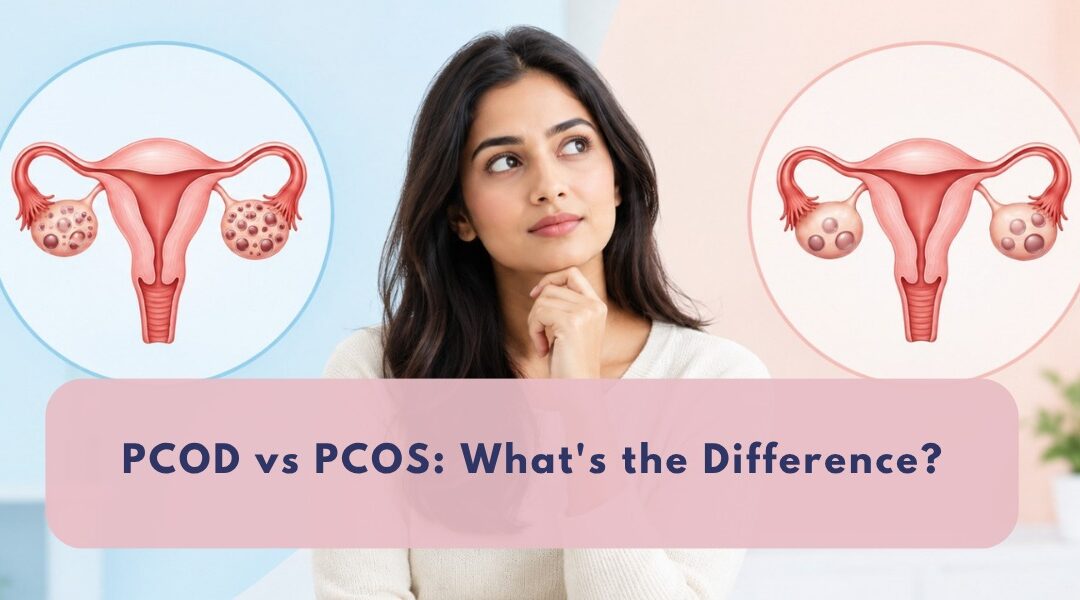
PCOD vs PCOS: What’s the Difference?

PCOD vs PCOS: What’s the Difference?

PCOD and PCOS get used as if they mean the same thing. They do not. PCOD stands for Polycystic Ovarian Disease, a milder condition where the ovaries release immature eggs that build up as small cysts. PCOS stands for Polycystic Ovary Syndrome, and it runs deeper. It is a hormonal and metabolic disorder that affects ovulation, insulin, and long-term health, not just the ovaries.

The confusion is understandable. Both involve cysts, irregular periods, and weight changes. But the way each one behaves, and what it does to your fertility and future health, is not the same. Getting the label right is the first step to treating it properly.

According to Dr. Pallavi Chauhan, a Gynecologist in Andheri East, “Most women who walk in worried about cysts actually have PCOD, which responds well to lifestyle changes. PCOS is the one I watch more closely, because it is a whole-body condition, not just an ovary problem.”

Still unsure where your reports fall on this comparison?

PCOD vs PCOS: A Side-by-Side Comparison

The quickest way to understand the difference is to see the two conditions next to each other. Here is how they compare on the points that matter most.

Basis

PCOD (Polycystic Ovarian Disease)

PCOS (Polycystic Ovary Syndrome)

What it is

An ovarian condition where the ovaries release many immature eggs

A hormonal and metabolic disorder affecting the whole body

Severity

Milder and more manageable

More serious, needs ongoing care

How common

Very common

Less common

Ovulation

Usually still happens

Often disrupted or absent

Main cause

Lifestyle and hormonal imbalance

Insulin resistance and higher androgen levels

Effect on fertility

Usually mild, natural conception is common

Can make conceiving harder, may need treatment

Long-term health risk

Lower

Higher risk of diabetes, high BP, and cholesterol

First line of treatment

Diet, exercise, weight management

Medical management plus lifestyle change

Both conditions are diagnosed in a similar way, through a symptom review, blood tests for hormone and sugar levels, and a pelvic ultrasound. The treatment is where they part ways, which is why a proper diagnosis matters before you start anything. You can read how both are handled clinically on the PCOD and PCOS treatment page.

Still unsure where your reports fall on this comparison?

How PCOS Affects Your Health and Fertility

PCOS is more than what shows up on an ultrasound. It is an endocrine disorder, which means it disrupts your hormones and your metabolism together, and that changes the whole picture.

  • Ovulation is often disrupted. The ovaries make higher levels of androgens, which can stall ovulation for months and make periods unpredictable or absent.
  • It is linked to insulin resistance. This is the metabolic part, and over time it raises the risk of type 2 diabetes, high blood pressure, and high cholesterol if it is left unmanaged.
  • The symptoms are more pronounced. Persistent acne, excess facial and body hair, scalp hair loss, and stubborn weight gain are more typical of PCOS than PCOD.
  • It is a leading cause of infertility. Because ovulation is affected, conceiving can be harder, though most women with PCOS still get pregnant with the right support. The options are covered on the infertility treatment page.

PCOS needs proper diagnosis and ongoing care rather than a one-time fix. If you want to understand how ovarian conditions connect to conception more broadly, the earlier post on how bilateral ovarian cysts affect fertility is a useful read alongside this one.

Why Choose Dr. Pallavi Chauhan for PCOD and PCOS Care in Andheri East?

Dr. Pallavi Chauhan has been working in gynaecology and obstetrics for over a decade. MBBS, MS OBGY, DNB, MRCOG London. She consults out of Mangala Hospital, Seven Hills, Criticare Asia, and other Andheri East hospitals.

Women who come in unsure whether they have PCOD or PCOS get a clear answer, not a vague one. She reviews the scan, checks hormone and sugar levels, and explains what the findings actually mean for that person’s cycle, weight, and fertility plans. For PCOD, the plan usually starts with realistic lifestyle changes. For PCOS, she builds a longer-term plan that manages both the hormones and the metabolic side. When medication or fertility support is the right step, she says so plainly, and when it is not, she says that too.

FAQ's

Is PCOD and PCOS the same thing?

No. PCOD is a milder ovarian condition where the ovaries release immature eggs that form small cysts. PCOS is a hormonal and metabolic disorder that affects ovulation, insulin, and long-term health, and it needs closer medical care.

Which is more serious, PCOD or PCOS?

PCOS is the more serious of the two. It affects your metabolism and can raise the risk of diabetes and heart problems if it is not managed, whereas PCOD often responds well to lifestyle changes alone.

Can I get pregnant with PCOD or PCOS?

Yes. Most women with PCOD conceive naturally because ovulation usually continues. Women with PCOS may need treatment to support ovulation, but pregnancy is very much possible with the right care.

How do I know if I have PCOD or PCOS?

It is confirmed through a symptom review, blood tests for hormone and sugar levels, and a pelvic ultrasound. These together tell your gynaecologist which condition you are dealing with and how to treat it.

References


Disclaimer:This blog is intended for general information only and does not replace a personal consultation with a qualified gynaecologist. 

.

Getting Pregnant With PCOS After 30: What to Know

Getting Pregnant With PCOS After 30: What to Know

Thirty hits, and suddenly PCOS feels like a bigger deal than it did at 24. If that’s where your head is right now, you’re in good company. Most of what women hear about PCOS and fertility is either outdated or exaggerated somewhere between “you’ll never conceive naturally” and “just lose weight, and it’ll fix itself.” Neither is quite true. Here’s what actually matters.

Dr. Pallavi Chauhan, Gynecologist in Andheri East, says: “PCOS doesn’t close the door on pregnancy after 30; it just means we need to work a little more closely with your body’s rhythm to open it back up.”

Can You Get Pregnant With PCOS After 30?

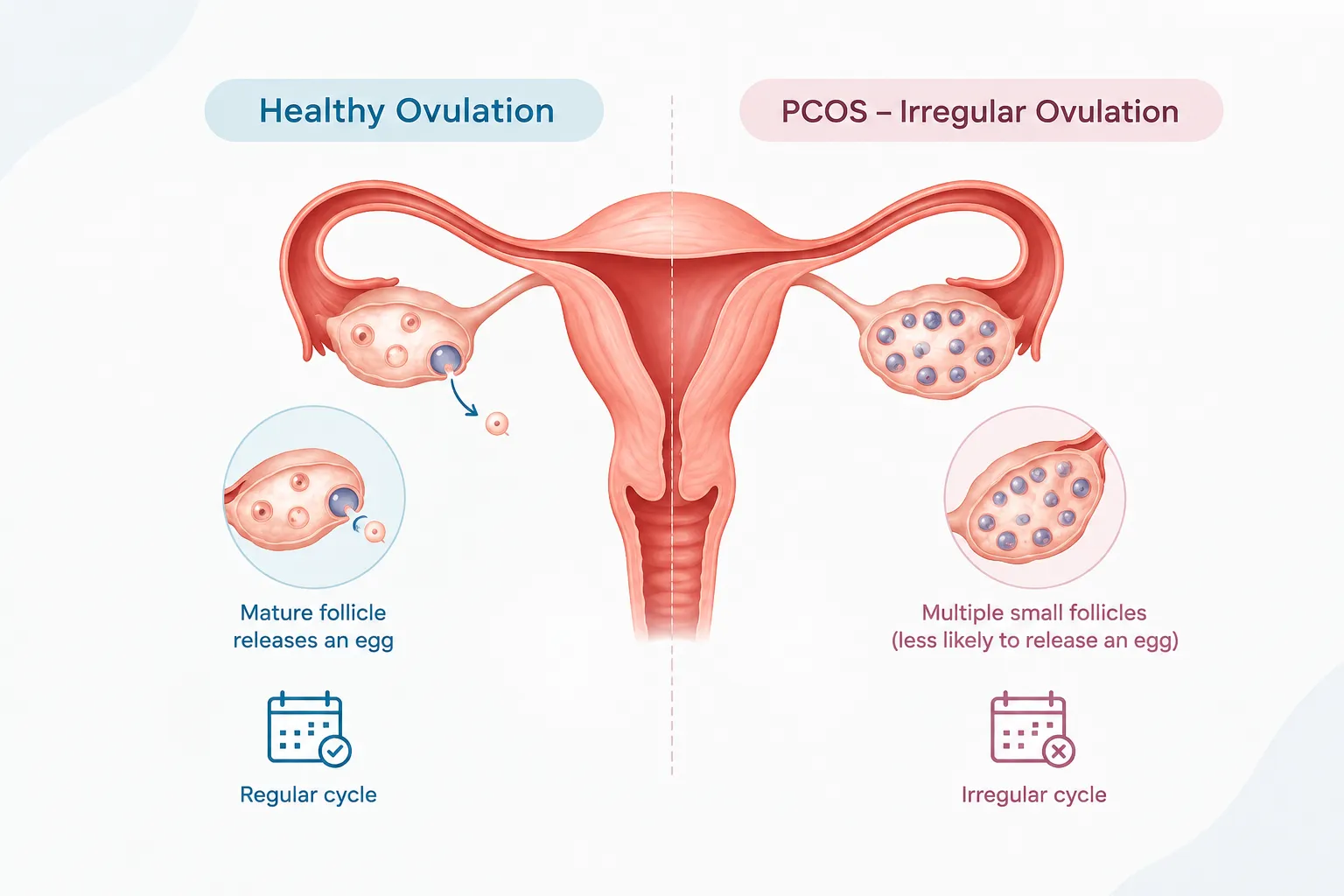
Short answer: yes. PCOS doesn’t shut down fertility it just makes ovulation unreliable. Some months your body releases an egg on schedule. Other months, nothing happens, and you don’t always know which kind of month you’re in.

Add age into the mix, and things get a little more complicated, not impossible. Fertility dips gradually after 30 regardless of PCOS, so the two factors stack rather than cancel each other out. That said, plenty of women with PCOS conceive in their 30s, some without any help at all, most with a bit of medical support.

Planning pregnancy with PCOS? Schedule a consultation with Dr. Pallavi Chauhan for personalised guidance.

How Does PCOS Affect Fertility After 30?

PCOS Can Affect Ovulation

PCOS can affect fertility primarily by interfering with regular ovulation.

Some women with PCOS may experience:

  • Irregular or infrequent periods
  • Irregular or absent ovulation
  • Longer menstrual cycles
  • Higher androgen levels
  • Insulin resistance
  • Difficulty predicting the fertile window

What Are the Chances of Getting Pregnant With PCOS After 30?

Nobody can hand you a clean percentage here, and honestly, be wary of anyone who tries. Your odds depend on your cycle pattern, your weight, insulin levels, ovarian reserve (your AMH levels give a rough read on this), and whether anything else on either partner’s side is complicating the picture.

What tends to hold true across most cases: women with PCOS do conceive, often within a year or two once ovulation is being properly supported. It’s rarely instant, but it’s rarely hopeless either.

How to Prepare for Pregnancy With PCOS After 30

Preparation counts for more here than it might for someone without PCOS, mostly because there’s more to fine-tune before you even start trying.

  • Tracking your menstrual cycles: This can help identify patterns and possible ovulation concerns.
  • Maintaining a healthy lifestyle: Regular physical activity, balanced nutrition and adequate sleep support overall health.
  • Managing metabolic health: If insulin resistance or other metabolic concerns are present, your doctor can recommend appropriate management.
  • Taking folic acid: Discuss the appropriate prenatal supplementation with your doctor before trying to conceive.
  • Reviewing medications: Some medicines may need to be changed or reviewed before pregnancy.
  • Considering preconception care: Your gynecologist can assess your medical history and advise whether any investigations are appropriate.

Having trouble conceiving with PCOS? Book a preconception consultation for personalised guidance.

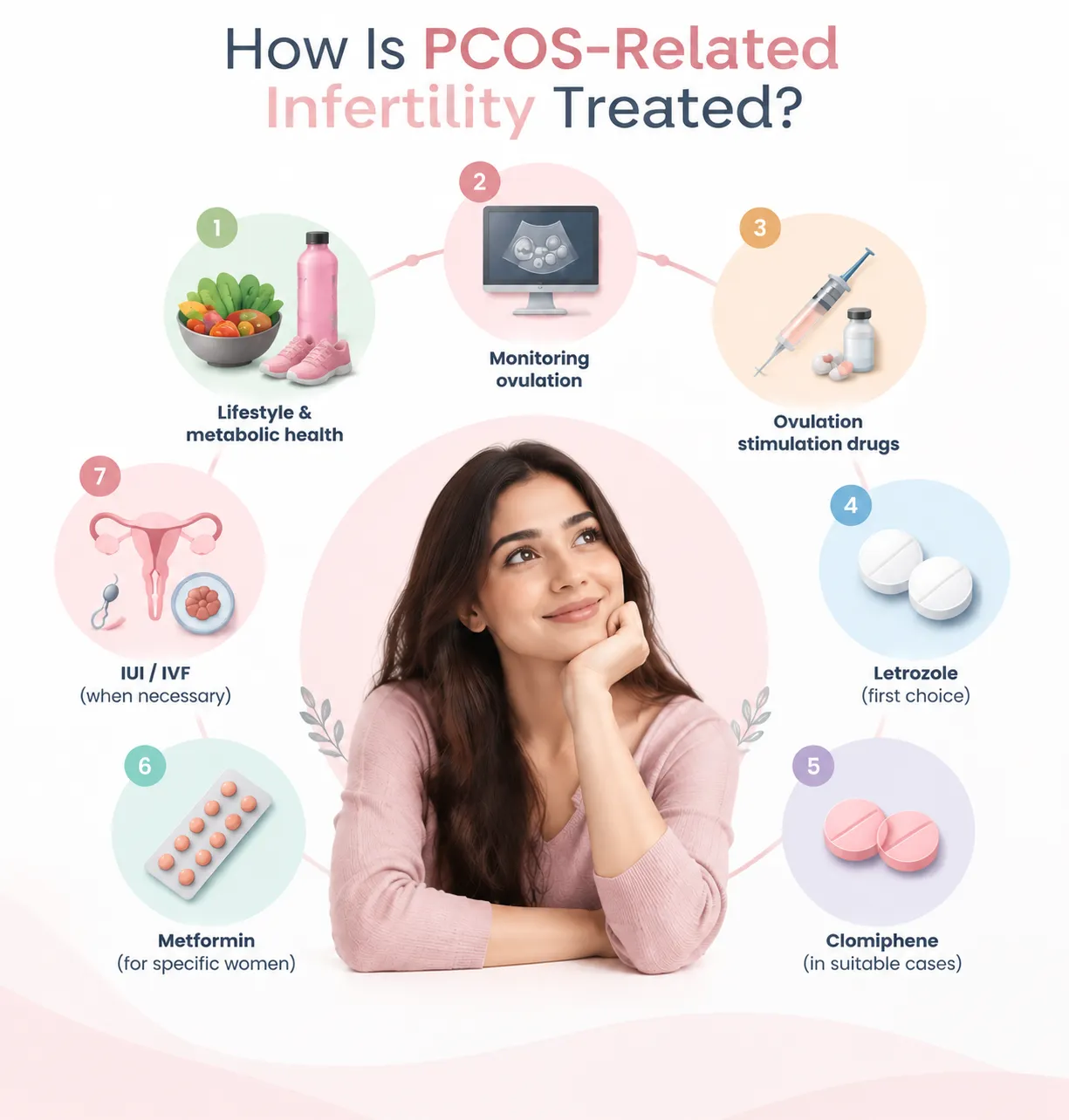
How Is PCOS-Related Infertility Treated?

In cases where PCOS is causing fertility issues due to irregular ovulation, treatment may be able to help you conceive.

Infographic shows PCOS infertility treatments around a smiling woman, highlighting lifestyle health, ovulation monitoring, drugs, IUI/IVF, metformin, clomiphene, and letrozole.

Treatment can involve:

  • Your lifestyle and metabolic health are managed.
  • The monitoring or assessment of ovulation.
  • Drugs that stimulate ovulation.
  • Letrozole is a drug used as the first choice in ovulation induction for women with anovulatory infertility caused by PCOS.
  • Clomiphene – in suitable cases
  • Metformin – for specific women, especially when metabolic factors are a factor
  • When necessary, IUI or IVF is performed.

When Should You See a Gynecologist for PCOS and Fertility?

When it comes to fertility planning after 30, it is not a rule that you should wait a year before you talk with your doctor,or if you have PCOS.

  • You should consider talking to a gynecologist sooner:
  • You have extremely irregular or irregular periods
  • You think you are not ovulating on a regular basis
  • You’ve been trying to conceive for a while without success.
  • You have previously experienced pregnancy loss
  • There are other known fertility issues

If PCOS and turning 30 have you second-guessing your pregnancy timeline, you don’t need to sort it out solo. Book an appointment with Dr. Pallavi Chauhan and get a plan built around your actual body, not a generic one-size-fits-all schedule.

FAQs

Is PCOS considered a high-risk pregnancy after 30?

Somewhat; there’s a slightly higher chance of gestational diabetes and blood pressure issues, which is why closer monitoring gets recommended. It’s about extra caution, not fragility.

Can lifestyle changes alone help me conceive with PCOS?

For some women, yes, weight and insulin management alone are enough to restart ovulation. For others, it’s a strong first step that makes medical treatment work better, rather than a full fix on its own.

Does PCOS increase the risk of miscarriage?

Slightly, often tied to insulin resistance and hormonal imbalance. One more reason preconception care is worth the time.

How long does PCOS fertility treatment usually take to work?

It varies more than people expect. Some women conceive within a couple of cycles of ovulation induction. Others need a longer, layered approach. The plan matters more than the timeline.

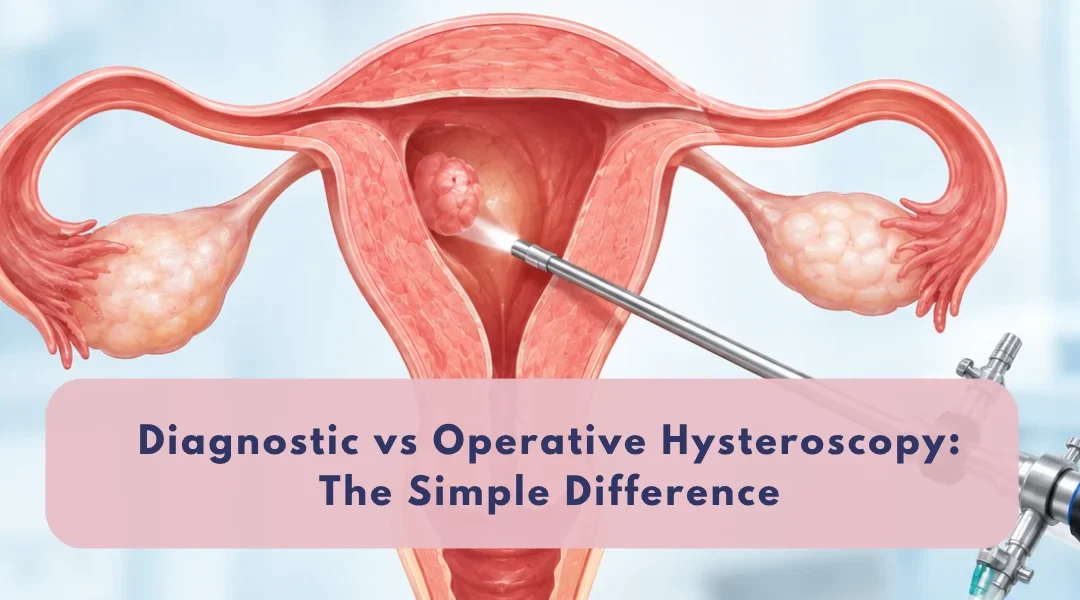
Diagnostic hysteroscopy finds a problem inside the uterus, while operative hysteroscopy treats it

Diagnostic hysteroscopy finds a problem inside the uterus, while operative hysteroscopy treats it

The two names are easy to mix up. The difference is their purpose. Diagnostic hysteroscopy lets the doctor inspect the uterine cavity. If a polyp, fibroid, adhesion or retained tissue needs to be removed, operative hysteroscopy may be used.

According to Dr. Pallavi Chauhan, the choice between diagnostic and operative hysteroscopy depends on what needs to be done. “Hysteroscopy gives us a clear view of the uterine cavity and allows us to diagnose and treat many uterine conditions during the same procedure,” she explains.

Not sure whether you need diagnostic or operative hysteroscopy?

What is the difference between the two procedures?

Both procedures involve passing a thin camera through the vagina and cervix. What happens next is different.

Point Diagnostic hysteroscopy Operative hysteroscopy
Why it is done To examine the uterine cavity To treat a condition found there
When it may help Unusual bleeding, fertility concerns or unclear scan findings Polyps, selected fibroids, adhesions or retained tissue
What the doctor uses A hysteroscope with a camera and light A hysteroscope with small surgical instruments
What recovery is like Often brief Depends on the treatment carried out

A doctor may find and treat a problem during one sitting, but that is not always possible. A second procedure may be arranged if more preparation is needed. The decision also depends on the finding and the patient’s consent. Read about hysteroscopy surgery in Andheri East before discussing the procedure with your gynaecologist.

Still unsure which type of hysteroscopy fits your situation?

Why might you need hysteroscopy?

Your doctor may bring up hysteroscopy after reviewing your symptoms, scan or fertility reports. These are four common reasons:

1. Bleeding that seems unusual

Heavy periods, bleeding between periods or bleeding after menopause may need a closer look inside the uterus. If this applies to you, the blog about bleeding after 10 years of menopause explains why a medical check is needed.

2. A polyp or fibroid on a scan

A scan can suggest that a growth is present. Hysteroscopy lets the doctor see its position more clearly. Some growths can be removed this way, while others need a different plan. You can read about uterine fibroid management on the treatment page.

3. Trouble getting pregnant

A polyp, adhesion or change in the uterine cavity may be found during a fertility assessment. Treatment is based on the finding. More information is available on hysteroscopic fertility enhancing surgery.

4. Scar tissue or retained tissue

In some cases, operative hysteroscopy can divide scar tissue or remove tissue left inside the uterus. Your gynaecologist will decide whether this method fits your situation.

Why consult Dr. Pallavi Chauhan?

Hysteroscopy is not the first step for every uterine concern. Dr. Pallavi Chauhan reviews the symptoms, available reports and relevant medical history before discussing it.

During the consultation, patients can ask why the procedure has been suggested, which type they may need and whether treatment can happen in the same sitting. Recovery instructions depend on what was done. To have your reports reviewed, book an appointment with Dr. Pallavi Chauhan.

FAQ's

Can diagnosis and treatment happen together?
Sometimes. If the doctor finds a problem that can be treated safely, both may happen in one sitting. Consent and prior planning are still needed.
Will I feel pain during hysteroscopy?
Experiences differ. Some people report cramps or discomfort. Pain relief, sedation or anaesthesia may be considered according to the procedure.
When can I go back to work?
This depends on whether the hysteroscopy was diagnostic or involved treatment. Your doctor will tell you when you can return to work and exercise.
Can hysteroscopy remove any uterine fibroid?
No. It is used for selected fibroids that extend into the uterine cavity. Their size and location help the doctor decide which treatment fits.
References


Disclaimer: This article provides general information and cannot diagnose a medical condition. Please consult a qualified gynaecologist for advice based on your symptoms and reports.

Call Now Button