


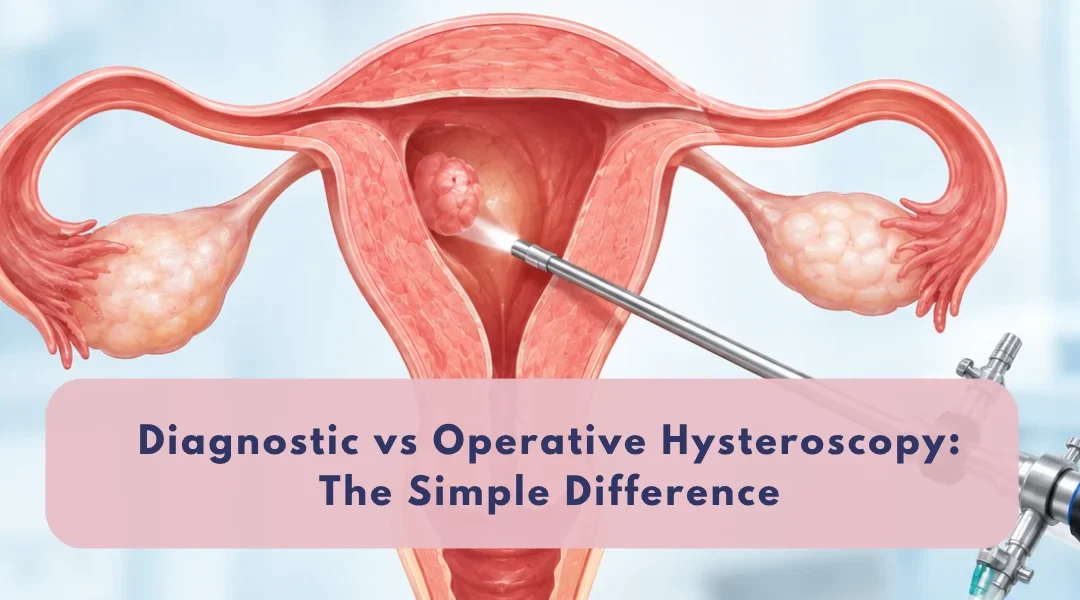
According to Dr. Pallavi Chauhan, the choice between diagnostic and operative hysteroscopy depends on what needs to be done. “Hysteroscopy gives us a clear view of the uterine cavity and allows us to diagnose and treat many uterine conditions during the same procedure,” she explains.
What is the difference between the two procedures?
| Point | Diagnostic hysteroscopy | Operative hysteroscopy |
| Why it is done | To examine the uterine cavity | To treat a condition found there |
| When it may help | Unusual bleeding, fertility concerns or unclear scan findings | Polyps, selected fibroids, adhesions or retained tissue |
| What the doctor uses | A hysteroscope with a camera and light | A hysteroscope with small surgical instruments |
| What recovery is like | Often brief | Depends on the treatment carried out |
A doctor may find and treat a problem during one sitting, but that is not always possible. A second procedure may be arranged if more preparation is needed. The decision also depends on the finding and the patient’s consent. Read about hysteroscopy surgery in Andheri East before discussing the procedure with your gynaecologist.
Why might you need hysteroscopy?
1. Bleeding that seems unusual
Heavy periods, bleeding between periods or bleeding after menopause may need a closer look inside the uterus. If this applies to you, the blog about bleeding after 10 years of menopause explains why a medical check is needed.
2. A polyp or fibroid on a scan
A scan can suggest that a growth is present. Hysteroscopy lets the doctor see its position more clearly. Some growths can be removed this way, while others need a different plan. You can read about uterine fibroid management on the treatment page.
3. Trouble getting pregnant
A polyp, adhesion or change in the uterine cavity may be found during a fertility assessment. Treatment is based on the finding. More information is available on hysteroscopic fertility enhancing surgery.
4. Scar tissue or retained tissue
In some cases, operative hysteroscopy can divide scar tissue or remove tissue left inside the uterus. Your gynaecologist will decide whether this method fits your situation.
Why consult Dr. Pallavi Chauhan?
During the consultation, patients can ask why the procedure has been suggested, which type they may need and whether treatment can happen in the same sitting. Recovery instructions depend on what was done. To have your reports reviewed, book an appointment with Dr. Pallavi Chauhan.
FAQ's
Can diagnosis and treatment happen together?
Will I feel pain during hysteroscopy?
When can I go back to work?
Can hysteroscopy remove any uterine fibroid?
- American College of Obstetricians and Gynecologists: Hysteroscopy
- NHS: Hysteroscopy
- Cleveland Clinic: Hysteroscopy
- MedlinePlus: Hysteroscopy
Disclaimer: This article provides general information and cannot diagnose a medical condition. Please consult a qualified gynaecologist for advice based on your symptoms and reports.
