

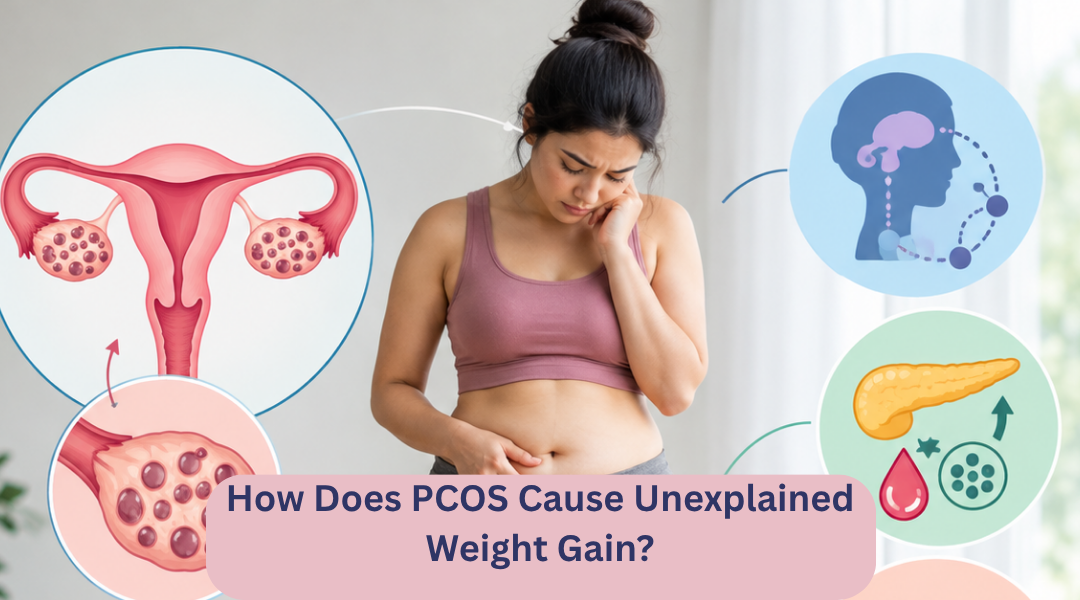
Many women with PCOS notice the scale going up even when they haven’t changed what they eat or how much they move. It isn’t a lack of effort. With PCOS the body doesn’t respond well to insulin, the hormones are out of balance, and the metabolism ends up holding on to more energy than it uses.
According to Dr. Pallavi Chauhan, an expert in PCOD & PCOS treatment in Andheri East, “PCOS is manageable, and most women can work towards a steadier hormonal balance with the right treatment plan.”
Worried about PCOS weight gain?
Why does PCOS cause weight gain?
Roughly one in eight women of reproductive age has PCOS,Not everyone with it gains weight, and plenty of women are lean. For those who do put on weight, insulin is usually at the centre of it.
Here’s how it goes. Cells stop responding to insulin the way they should, so the body keeps making more. All that insulin makes it easier to store fat. It also nudges the ovaries into making more androgens (the male hormones every woman has in small amounts), and those seem to push fat towards the belly. More belly fat means more insulin resistance, so it feeds itself. Bad sleep and stress make it worse.
It can also begin the other way round. A woman who is genetically prone to PCOS may put on weight first,which can trigger or worsen the condition, and make its onset feel sudden. . And despite the name, PCOS isn’t only about cysts on the ovaries. This blog on bilateral ovarian cysts and fertility explains the connection in more detail.
Weight gain doesn’t always mean PCOS. Thyroid trouble, some medicines, pregnancy, and the years before menopause can cause it as well, so your doctor will check for those first
For more information about PCOS and weight management.
What helps with PCOS weight gain?
Lifestyle is where every guideline starts, and nobody is asking for a huge change. Stopping further gain is a good first goal. If you’re carrying extra weight, losing 5 to 10 percent already helps: insulin works better, hormone levels settle, and periods often become more regular. No single diet is the best one, so choose something you can keep doing, and add some activity you actually like. When that isn’t enough, your doctor might add a medicine like metformin. That is their call to make, so don’t start it on your own.
Weight also matters for the long run. Extra weight with insulin resistance raises the chances of type 2 diabetes and high cholesterol, and heart disease risk goes up too.
Go and see a gynaecologist if your periods stay irregular for a few months, if you’re gaining weight along with acne or unwanted hair, or if you’re finding it hard to conceive.
Why choose Dr. Pallavi Chauhan for PCOS treatment in Andheri East?
Dr. Pallavi Chauhan is a Consultant Obstetrician and Gynaecologist in Andheri East with over ten years of experience (MBBS, MS, DNB, MRCOG). PCOS and menstrual health are among her main areas of work. She builds the plan around your age, your symptoms and what you’re hoping for, whether that’s lifestyle advice, regular periods, skin and hair concerns, getting pregnant, or keeping an eye on your blood sugar and thyroid. If you’d like to talk it through, book an appointment
FAQ's
Can PCOS cause weight gain even if I eat well?
Yes, insulin resistance makes fat easier to store and harder to lose, but it’s worth getting your thyroid checked too.
Can you have PCOS and still be lean?
Yes, it’s diagnosed from your periods, signs of high androgens and the ovaries, not from your weight.
Will losing weight cure PCOS?
There’s no permanent cure, but losing even a little weight often makes symptoms easier.
Does PCOS weight gain affect fertility?
It can, because ovulation gets irregular, but many women still conceive, sometimes with infertility treatment support.
References
- International evidence-based guideline on assessment and management of PCOS: a Nordic perspective. Acta Obstet Gynecol Scand, 2024.
- PCOS: Symptoms and Causes – Mayo Clinic – Explains how hormonal imbalances in PCOS can contribute to weight gain and other symptoms.
Disclaimer:This blog is intended for general information only and does not replace a personal consultation with a qualified gynaecologist.
.
