

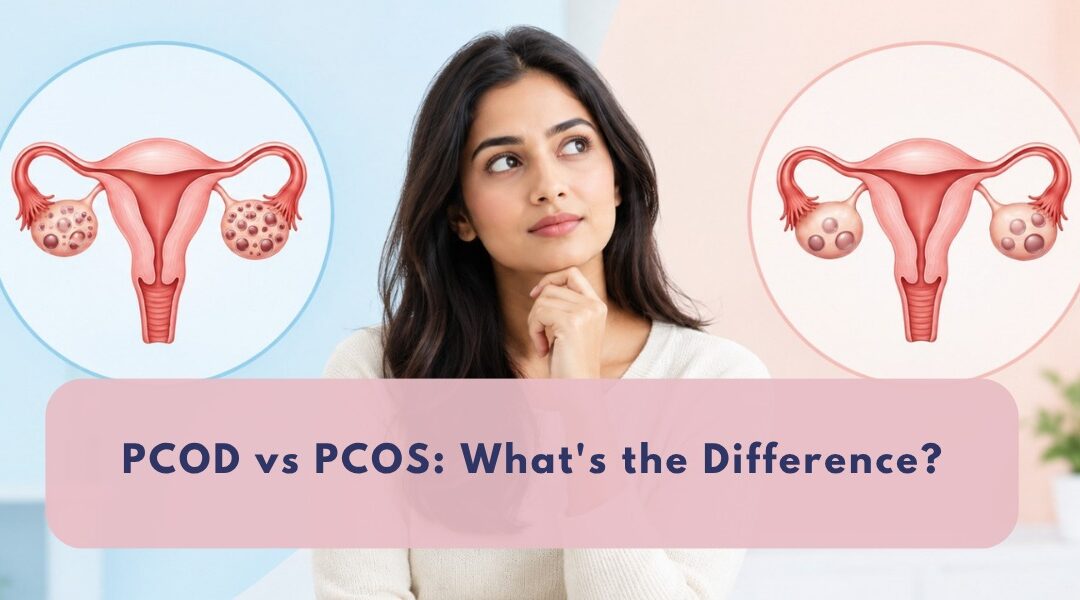
PCOD and PCOS get used as if they mean the same thing. They do not. PCOD stands for Polycystic Ovarian Disease, a milder condition where the ovaries release immature eggs that build up as small cysts. PCOS stands for Polycystic Ovary Syndrome, and it runs deeper. It is a hormonal and metabolic disorder that affects ovulation, insulin, and long-term health, not just the ovaries.
The confusion is understandable. Both involve cysts, irregular periods, and weight changes. But the way each one behaves, and what it does to your fertility and future health, is not the same. Getting the label right is the first step to treating it properly.
According to Dr. Pallavi Chauhan, a Gynecologist in Andheri East, “Most women who walk in worried about cysts actually have PCOD, which responds well to lifestyle changes. PCOS is the one I watch more closely, because it is a whole-body condition, not just an ovary problem.”
Still unsure where your reports fall on this comparison?
PCOD vs PCOS: A Side-by-Side Comparison
The quickest way to understand the difference is to see the two conditions next to each other. Here is how they compare on the points that matter most.
|
Basis |
PCOD (Polycystic Ovarian Disease) |
PCOS (Polycystic Ovary Syndrome) |
|
What it is |
An ovarian condition where the ovaries release many immature eggs |
A hormonal and metabolic disorder affecting the whole body |
|
Severity |
Milder and more manageable |
More serious, needs ongoing care |
|
How common |
Very common |
Less common |
|
Ovulation |
Usually still happens |
Often disrupted or absent |
|
Main cause |
Lifestyle and hormonal imbalance |
Insulin resistance and higher androgen levels |
|
Effect on fertility |
Usually mild, natural conception is common |
Can make conceiving harder, may need treatment |
|
Long-term health risk |
Lower |
Higher risk of diabetes, high BP, and cholesterol |
|
First line of treatment |
Diet, exercise, weight management |
Medical management plus lifestyle change |
Both conditions are diagnosed in a similar way, through a symptom review, blood tests for hormone and sugar levels, and a pelvic ultrasound. The treatment is where they part ways, which is why a proper diagnosis matters before you start anything. You can read how both are handled clinically on the PCOD and PCOS treatment page.
Still unsure where your reports fall on this comparison?
How PCOS Affects Your Health and Fertility
PCOS is more than what shows up on an ultrasound. It is an endocrine disorder, which means it disrupts your hormones and your metabolism together, and that changes the whole picture.
- Ovulation is often disrupted. The ovaries make higher levels of androgens, which can stall ovulation for months and make periods unpredictable or absent.
- It is linked to insulin resistance. This is the metabolic part, and over time it raises the risk of type 2 diabetes, high blood pressure, and high cholesterol if it is left unmanaged.
- The symptoms are more pronounced. Persistent acne, excess facial and body hair, scalp hair loss, and stubborn weight gain are more typical of PCOS than PCOD.
- It is a leading cause of infertility. Because ovulation is affected, conceiving can be harder, though most women with PCOS still get pregnant with the right support. The options are covered on the infertility treatment page.
PCOS needs proper diagnosis and ongoing care rather than a one-time fix. If you want to understand how ovarian conditions connect to conception more broadly, the earlier post on how bilateral ovarian cysts affect fertility is a useful read alongside this one.
Why Choose Dr. Pallavi Chauhan for PCOD and PCOS Care in Andheri East?
Dr. Pallavi Chauhan has been working in gynaecology and obstetrics for over a decade. MBBS, MS OBGY, DNB, MRCOG London. She consults out of Mangala Hospital, Seven Hills, Criticare Asia, and other Andheri East hospitals.
Women who come in unsure whether they have PCOD or PCOS get a clear answer, not a vague one. She reviews the scan, checks hormone and sugar levels, and explains what the findings actually mean for that person’s cycle, weight, and fertility plans. For PCOD, the plan usually starts with realistic lifestyle changes. For PCOS, she builds a longer-term plan that manages both the hormones and the metabolic side. When medication or fertility support is the right step, she says so plainly, and when it is not, she says that too.
FAQ's
Is PCOD and PCOS the same thing?
No. PCOD is a milder ovarian condition where the ovaries release immature eggs that form small cysts. PCOS is a hormonal and metabolic disorder that affects ovulation, insulin, and long-term health, and it needs closer medical care.
Which is more serious, PCOD or PCOS?
PCOS is the more serious of the two. It affects your metabolism and can raise the risk of diabetes and heart problems if it is not managed, whereas PCOD often responds well to lifestyle changes alone.
Can I get pregnant with PCOD or PCOS?
Yes. Most women with PCOD conceive naturally because ovulation usually continues. Women with PCOS may need treatment to support ovulation, but pregnancy is very much possible with the right care.
How do I know if I have PCOD or PCOS?
It is confirmed through a symptom review, blood tests for hormone and sugar levels, and a pelvic ultrasound. These together tell your gynaecologist which condition you are dealing with and how to treat it.
References
- Polycystic Ovary Syndrome (PCOS). National Library of Medicine, StatPearls. https://www.ncbi.nlm.nih.gov/books/NBK459251/
- Prevalence of polycystic ovary syndrome in India: A systematic review. Journal of Human Reproductive Sciences. https://pmc.ncbi.nlm.nih.gov/articles/PMC7523301/
Disclaimer:This blog is intended for general information only and does not replace a personal consultation with a qualified gynaecologist.
.
