


Thirty hits, and suddenly PCOS feels like a bigger deal than it did at 24. If that’s where your head is right now, you’re in good company. Most of what women hear about PCOS and fertility is either outdated or exaggerated somewhere between “you’ll never conceive naturally” and “just lose weight, and it’ll fix itself.” Neither is quite true. Here’s what actually matters.
Dr. Pallavi Chauhan, Gynecologist in Andheri East, says: “PCOS doesn’t close the door on pregnancy after 30; it just means we need to work a little more closely with your body’s rhythm to open it back up.”
Can You Get Pregnant With PCOS After 30?
Short answer: yes. PCOS doesn’t shut down fertility it just makes ovulation unreliable. Some months your body releases an egg on schedule. Other months, nothing happens, and you don’t always know which kind of month you’re in.
Add age into the mix, and things get a little more complicated, not impossible. Fertility dips gradually after 30 regardless of PCOS, so the two factors stack rather than cancel each other out. That said, plenty of women with PCOS conceive in their 30s, some without any help at all, most with a bit of medical support.
Planning pregnancy with PCOS? Schedule a consultation with Dr. Pallavi Chauhan for personalised guidance.
How Does PCOS Affect Fertility After 30?
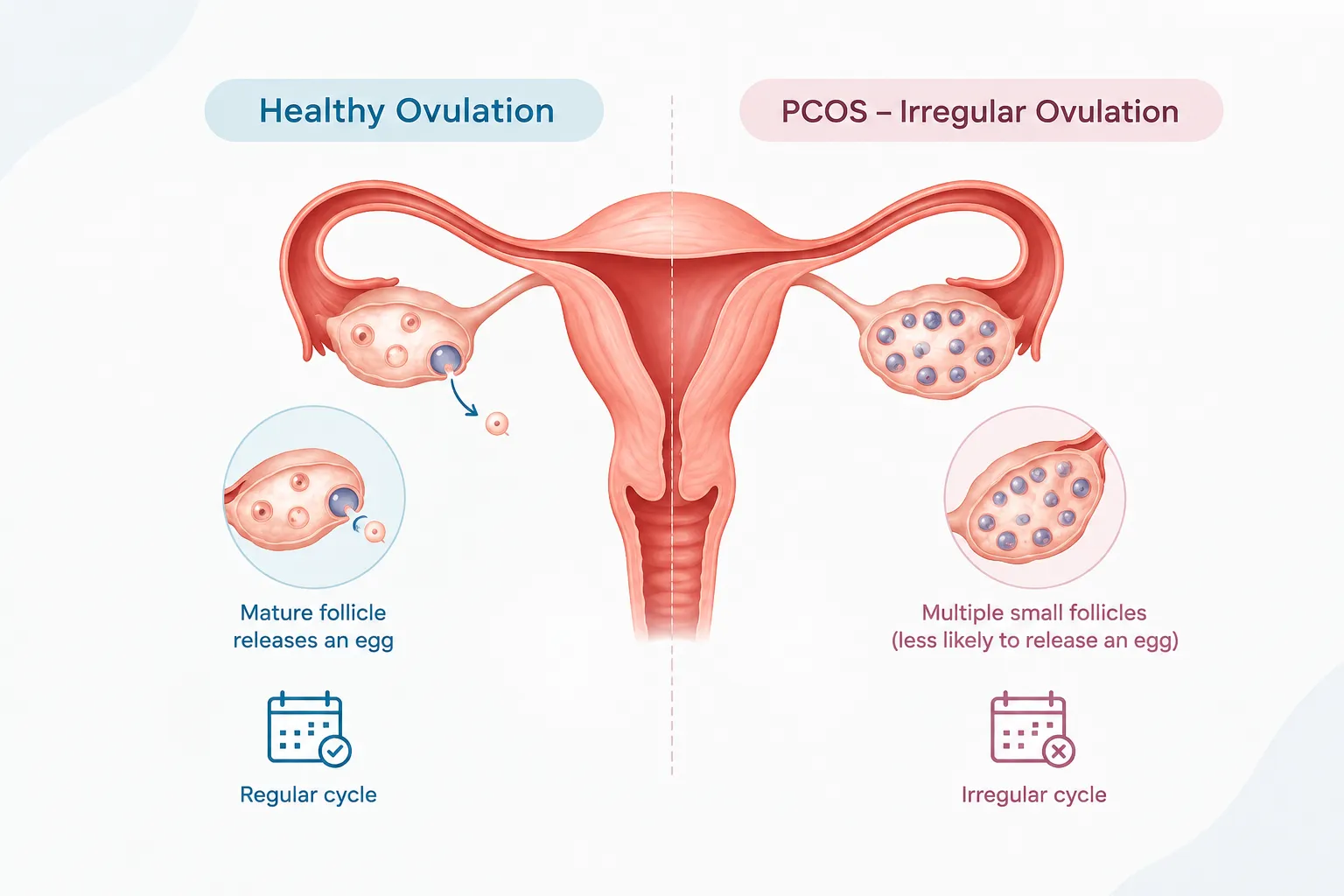
PCOS can affect fertility primarily by interfering with regular ovulation.
Some women with PCOS may experience:
- Irregular or infrequent periods
- Irregular or absent ovulation
- Longer menstrual cycles
- Higher androgen levels
- Insulin resistance
- Difficulty predicting the fertile window
What Are the Chances of Getting Pregnant With PCOS After 30?
Nobody can hand you a clean percentage here, and honestly, be wary of anyone who tries. Your odds depend on your cycle pattern, your weight, insulin levels, ovarian reserve (your AMH levels give a rough read on this), and whether anything else on either partner’s side is complicating the picture.
What tends to hold true across most cases: women with PCOS do conceive, often within a year or two once ovulation is being properly supported. It’s rarely instant, but it’s rarely hopeless either.
How to Prepare for Pregnancy With PCOS After 30
Preparation counts for more here than it might for someone without PCOS, mostly because there’s more to fine-tune before you even start trying.
- Tracking your menstrual cycles: This can help identify patterns and possible ovulation concerns.
- Maintaining a healthy lifestyle: Regular physical activity, balanced nutrition and adequate sleep support overall health.
- Managing metabolic health: If insulin resistance or other metabolic concerns are present, your doctor can recommend appropriate management.
- Taking folic acid: Discuss the appropriate prenatal supplementation with your doctor before trying to conceive.
- Reviewing medications: Some medicines may need to be changed or reviewed before pregnancy.
- Considering preconception care: Your gynecologist can assess your medical history and advise whether any investigations are appropriate.
Having trouble conceiving with PCOS? Book a preconception consultation for personalised guidance.
How Is PCOS-Related Infertility Treated?
In cases where PCOS is causing fertility issues due to irregular ovulation, treatment may be able to help you conceive.
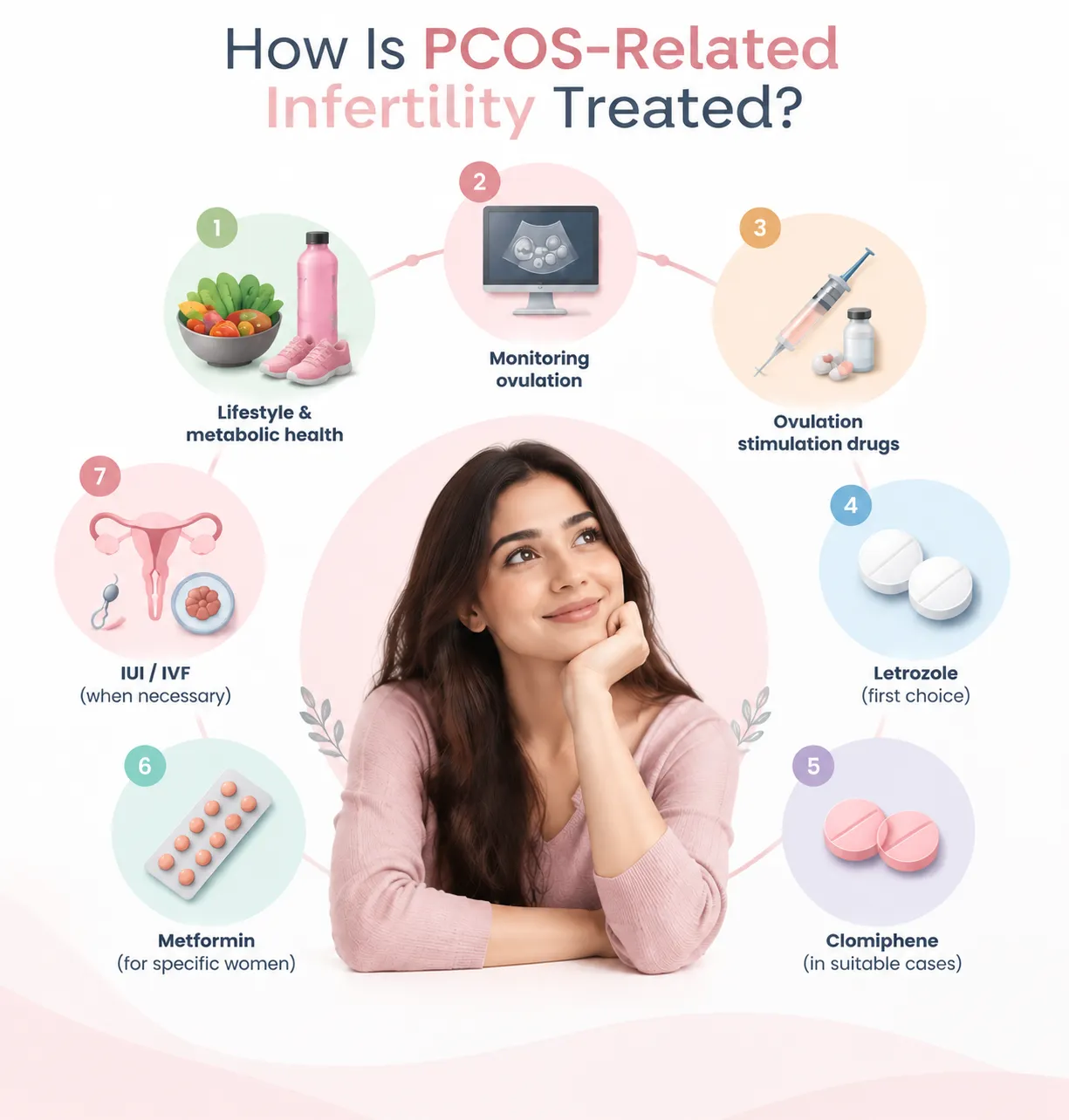
Treatment can involve:
- Your lifestyle and metabolic health are managed.
- The monitoring or assessment of ovulation.
- Drugs that stimulate ovulation.
- Letrozole is a drug used as the first choice in ovulation induction for women with anovulatory infertility caused by PCOS.
- Clomiphene – in suitable cases
- Metformin – for specific women, especially when metabolic factors are a factor
- When necessary, IUI or IVF is performed.
When Should You See a Gynecologist for PCOS and Fertility?
When it comes to fertility planning after 30, it is not a rule that you should wait a year before you talk with your doctor,or if you have PCOS.
- You should consider talking to a gynecologist sooner:
- You have extremely irregular or irregular periods
- You think you are not ovulating on a regular basis
- You’ve been trying to conceive for a while without success.
- You have previously experienced pregnancy loss
- There are other known fertility issues
If PCOS and turning 30 have you second-guessing your pregnancy timeline, you don’t need to sort it out solo. Book an appointment with Dr. Pallavi Chauhan and get a plan built around your actual body, not a generic one-size-fits-all schedule.
FAQs
Is PCOS considered a high-risk pregnancy after 30?
Somewhat; there’s a slightly higher chance of gestational diabetes and blood pressure issues, which is why closer monitoring gets recommended. It’s about extra caution, not fragility.
Can lifestyle changes alone help me conceive with PCOS?
For some women, yes, weight and insulin management alone are enough to restart ovulation. For others, it’s a strong first step that makes medical treatment work better, rather than a full fix on its own.
Does PCOS increase the risk of miscarriage?
Slightly, often tied to insulin resistance and hormonal imbalance. One more reason preconception care is worth the time.
How long does PCOS fertility treatment usually take to work?
It varies more than people expect. Some women conceive within a couple of cycles of ovulation induction. Others need a longer, layered approach. The plan matters more than the timeline.
