


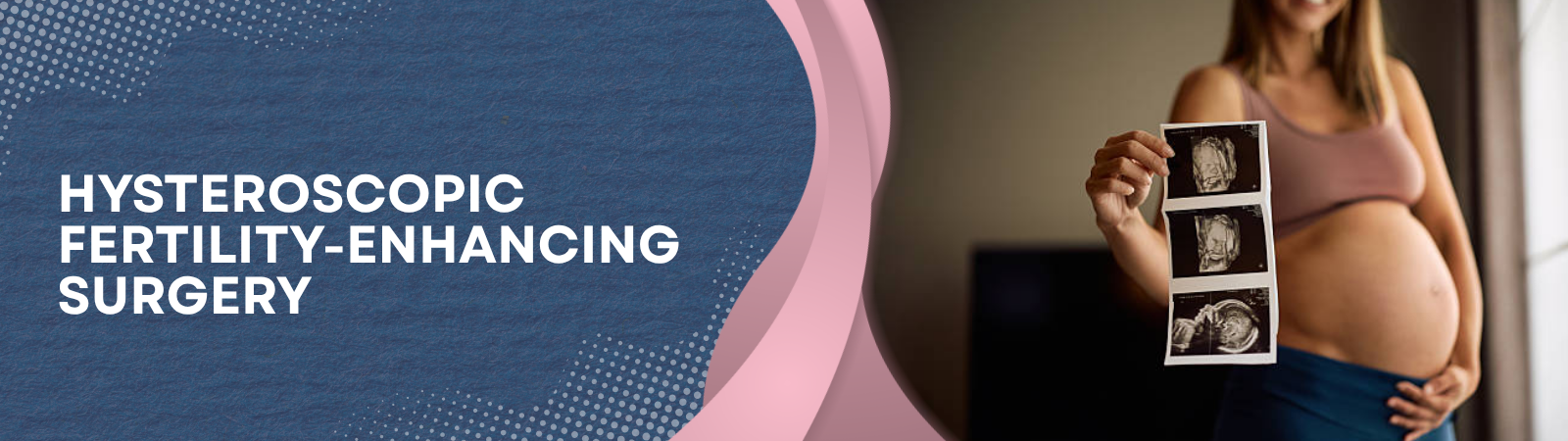
Hysteroscopic Fertility-Enhancing Surgery in Andheri East, Mumbai
Hysteroscopic fertility-enhancing surgery is a minimally invasive procedure performed inside the uterine cavity using a thin, lighted telescope called a hysteroscope. Unlike general hysteroscopy, used to diagnose heavy bleeding, this procedure specifically corrects intrauterine conditions that block conception or cause implantation failure, polyps, fibroids pressing into the cavity, scar tissue from a previous D&C, or a congenital uterine septum.
Dr. Pallavi Chauhan, Consultant Obstetrician & Gynecologist in Andheri East, performs this procedure for couples trying to conceive naturally, women preparing for IUI or IVF, and patients referred after failed fertility cycles. Performed through the natural vaginal route, no cuts no scars, most patients return home the same day.
Dr Pallavi Chauhan says, “Every uterus tells a story. Hysteroscopy lets us see that story clearly and rewrite the parts that are getting in the way of pregnancy.”
Worried something inside your uterus is stopping you from conceiving?
How Hysteroscopic Surgery Improves Fertility & Conception Chances
The uterus must offer a smooth, healthy cavity for a fertilised embryo to implant. Even small structural problems can quietly prevent pregnancy.

Restores a clean uterine cavity
removing polyps, fibroids, or scar tissue that interfere with embryo implantation
Improves endometrial receptivity
clearing the lining so it can thicken and respond properly to hormones
Corrects congenital uterine anomalies
such as a septate uterus, which is associated with recurrent pregnancy loss
Increases IVF success rates
published evidence and clinical experience consistently show better embryo transfer outcomes after hysteroscopic correction
Allows tubal opening assessment & cannulation
relieving blocked fallopian tube openings (cornual blocks) in selected cases
Reduces recurrent miscarriage risk
by repairing structural causes of pregnancy loss
For women aged 30 and above, where fertility windows are narrowing, identifying and correcting these issues early rather than going through multiple unsuccessful IUI or IVF cycles can save time, money, and emotional strain.
Types of Hysteroscopic Fertility-Enhancing Procedures
Dr. Pallavi Chauhan performs the full range of fertility-enhancing hysteroscopic procedures:

Hysteroscopic Polypectomy
Removal of endometrial polyps that block sperm passage and prevent implantation.

Hysteroscopic Myomectomy
Removal of fibroids projecting into the cavity; even 1–2 cm submucous fibroids can reduce implantation chances.
Hysteroscopic Adhesiolysis (Asherman's Treatment)
Releasing intrauterine adhesions from prior D&C, miscarriage, or infection to restore cavity volume and flow.
Hysteroscopic Septum Resection (Metroplasty)
Correcting a congenital uterine septum linked to recurrent miscarriage and infertility.
Tubal Cannulation
Opening blocked cornual ends of the fallopian tubes to restore patency in proximal tubal blocks.
Endometrial Scratch / PRP-Enhanced Procedures
Controlled endometrial intervention alongside hysteroscopy to improve receptivity before the next IVF cycle.
Not sure which procedure applies to your case? A focused fertility assessment with Dr. Pallavi will tell you exactly.
The Hysteroscopic Surgery Procedure: Step-by-Step
Understanding what happens during the procedure removes much of the anxiety patients carry. Here is exactly what to expect:

Step 1: Pre-Operative Evaluation
History, transvaginal ultrasound, SIS/HSG if needed, blood work, and anaesthesia clearance.

Step 2: Scheduling
Performed on days 6–11 of the cycle for optimal uterine visibility.

Step 3: Day of Surgery
Empty-stomach admission; short general anaesthesia or sedation at Mangala, Seven Hills, or Apollo Clinic (Andheri East/Marol).

Step 4: The Procedure
A 3–5 mm hysteroscope is passed through the cervix; sterile fluid distends the cavity, and micro-instruments remove polyps, fibroids, scar tissue, or septum.

Step 5: Duration
20–45 minutes, with no external cuts or stitches.

Step 6: Recovery
2–4 hours of rest, same-day discharge, with mild spotting and cramping for 24–48 hours.

Step 7: Tissue Sample
The removed tissue is sent for histopathology to confirm the diagnosis.
Recovery Timeline and When You Can Try to Conceive
Recovery is one of the biggest advantages of hysteroscopic surgery; it’s far faster than abdominal or laparoscopic alternatives. Here is the typical timeline:
| Timeframe | What to Expect |
| Day of surgery | Light spotting, mild cramping, and drowsiness from anaesthesia. Rest at home. |
| Day 1–2 | Resume light activities. Mild bleeding may continue. |
| Day 3–5 | Most patients return to work and routine activities. |
| Week 1–2 | Bleeding fully settles. Avoid intercourse, swimming, and tampons during this window. |
| Week 2–4 | Follow-up review with Dr. Pallavi. Imaging may be repeated to confirm a healed cavity. |
| Cycle 1 after surgery | Most patients can resume trying naturally or begin IUI/IVF planning. |
| 6–8 weeks for septum/adhesiolysis cases | Slightly longer wait recommended before conception attempts to ensure full healing. |
When can you try to conceive?
After polypectomy or submucous fibroid removal, conception attempts can usually resume in the very next cycle. For more involved procedures like septum resection or adhesiolysis, a recovery window of 6–8 weeks is recommended, followed by a confirmatory check before trying to conceive. In IVF cases, the cycle in which surgery is performed is typically skipped, with embryo transfer planned in the subsequent cycle to allow the uterine lining to heal optimally.
Dr. Pallavi personally reviews each case and gives a clear, written timeline based on what was done; there’s no guesswork.
Why Choose Dr Pallavi Chauhan For PCOD & PCOS Treatment?
Choosing the right gynecologist for fertility-focused hysteroscopy isn’t just about the procedure; it’s about the judgment of when to operate, what to operate on, and how to plan around your fertility timeline.

Surgery is recommended only when it genuinely improves IUI/IVF outcomes.
Local, accessible care in Marol, Andheri East
MRCOG (London) Certified.
MS (OB-GYN), Topiwala National Medical College + DNB.
MS (OB-GYN), Topiwala National Medical College + DNB.
Hands-on hysteroscopic surgical experience.
Member of FOGSI & RCOG
Same-day discharge with compassionate, personally guided aftercare
Take the next step toward parenthood. Book your fertility consultation with Dr. Pallavi Chauhan today.
Frequently Asked Questions
Q1. Is fertility surgery painful?
No, it is not painful. The surgery is done under general anesthesia or sedation. This means you feel nothing during the surgery. Most women feel cramping for one to two days after the surgery. This cramping is like period pain. Can be managed with simple medicine.
Q2. How soon can I plan IVF? Try for pregnancy after hysteroscopic surgery?
You can try to get pregnant or start IVF in the next menstrual cycle. This is for polyps and fibroids. If you have septum resection or adhesiolysis, Dr. Pallavi usually suggests waiting six to eight weeks. She will check to make sure you are fully healed before you try to get pregnant.
Q3. Will hysteroscopic surgery guarantee pregnancy?
No surgery can guarantee pregnancy. Getting pregnant depends on things. These include egg quality, sperm health, how well your tubes work, your age, and your lifestyle. If a problem in the uterus is found and fixed, more people get pregnant. This is true for both conception and IVF. Dr. Pallavi will tell you what to expect based on your case.
Q4. How is hysteroscopic fertility surgery different from hysteroscopy?
Regular hysteroscopy is a check inside the uterus. Hysteroscopic fertility surgery is different. It not only checks but also fixes the problem. This might be a polyp, fibroid, scar tissue, or septum. The goal is to improve your chances of getting pregnant or having IVF.
Q5. Are there any risks or complications?
Hysteroscopic surgery is very safe. Rare risks include infection, light bleeding, or problems with fluid during long surgeries. Rarely, there might be a hole in the uterus. These risks are minimized with an experienced doctor and a good hospital. Dr. Pallavi ensures both.
Q6. Will I need to stay in the hospital?
No, you usually do not need to stay. This is a day-care procedure. You come in the morning. Go home the same evening. You will go home once your vitals are stable. You have urinated comfortably.